
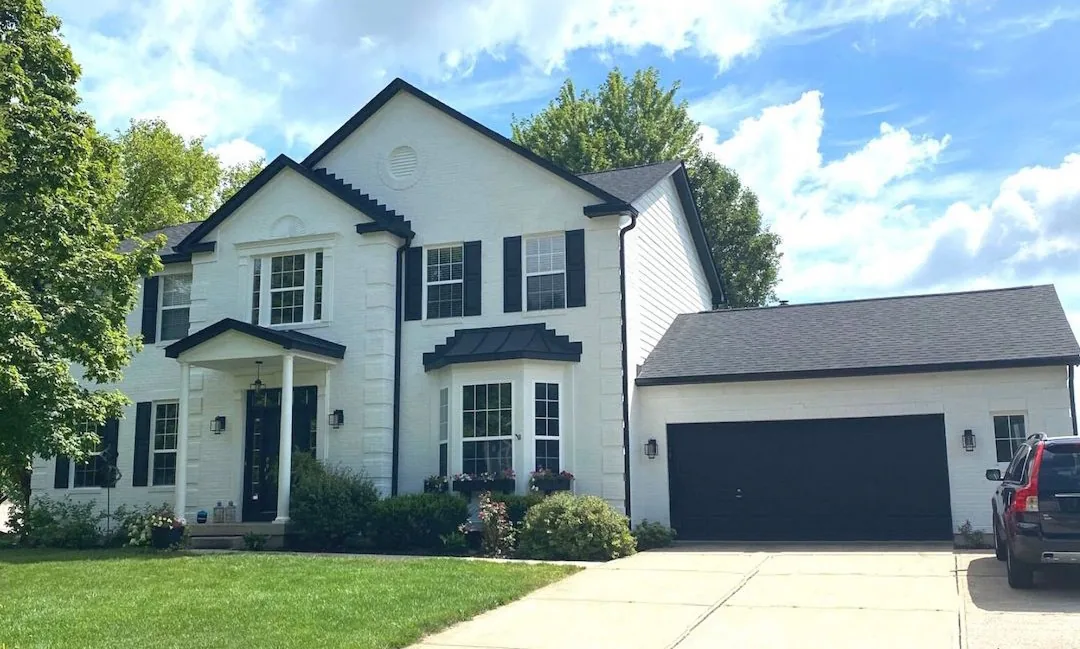
Need a Brick Painter in North York?
The masonry on a North York house has usually been standing a long time. In Mount Dennis, 32% of the homes predate 1960 and another 34% went up between 1961 and 1980. Bathurst Manor is 36% pre-1960, and Banbury-Don Mills is 25% pre-1960 with a further 30% from the 1961 to 1980 stretch. Those are City of Toronto neighbourhood profile numbers. So the brick on a typical 1958 bungalow around here has already taken close to seventy Toronto winters, and it has opinions about what you put on it.
Painting brick is the biggest visual change you can make to a house, and the hardest one to undo. Get the product wrong and you have sealed water inside a wall that used to dry itself out. So we treat it as two decisions. First, what your wall can safely carry. Then, what colour you want it.
What Painting Brick Actually Takes
Brick is not a flat surface you put colour on. It is a porous material that moves water vapour, and every decision on a brick job comes back to protecting that. The industry measures it in perms. The Brick Industry Association's Technical Note 6 classes anything above 10 perms as vapour permeable, 1 to 10 as semi-permeable, and 0.1 or under as vapour impermeable. It also notes that treatments made for brick commonly report 20 to 85 perms, and that piling on extra layers of any treatment lowers its permeance. So a heavy build of ordinary film paint on brick is the failure mode, not the finish.
That same technical note is direct about ordinary acrylic latex on brick. It forms a film on the surface rather than penetrating the pores, it is typically only vapour semi-permeable, and applying it to brick creates a recurring exterior maintenance task requiring multiple reapplications over the life of the brickwork. We will still use a masonry-rated acrylic where the wall calls for it. We just tell you what you are signing up for.
Before any of that, we look at moisture. The white crusty bloom on brick is efflorescence, and the Concrete Masonry and Hardscapes Association lays out the three conditions behind it. There have to be soluble compounds in the masonry, moisture has to be present to pick up the salts and carry them to the surface, and some force such as evaporation or hydrostatic pressure has to move the solution. Their guidance warns that applying a clear coating to a wall that tends to effloresce, without fixing the cause, can lead to surface spalling of masonry units. The brick association agrees: efflorescence on the exterior is a sign that excess moisture is present, and that gets sorted out before any treatment.
Then prep and primer. Brick itself is normally pH neutral, but it is laid in mortar that is chemically basic, so the technical note recommends an alkaline-resistant primer or a paint specifically designated for use on masonry. New or repaired masonry gets at least 30 days to cure and dry completely, which matches what our exterior paint's own data sheet asks for. Cleaning is the least aggressive method that works, usually a stiff non-metallic brush and soapy water or low-pressure washing. Sandblasting is out, because it damages brickwork. Unbuffered acids are out as a general cleaning method for the same reason. If you want to see the rest of what we handle, our North York painting services are all in one place.
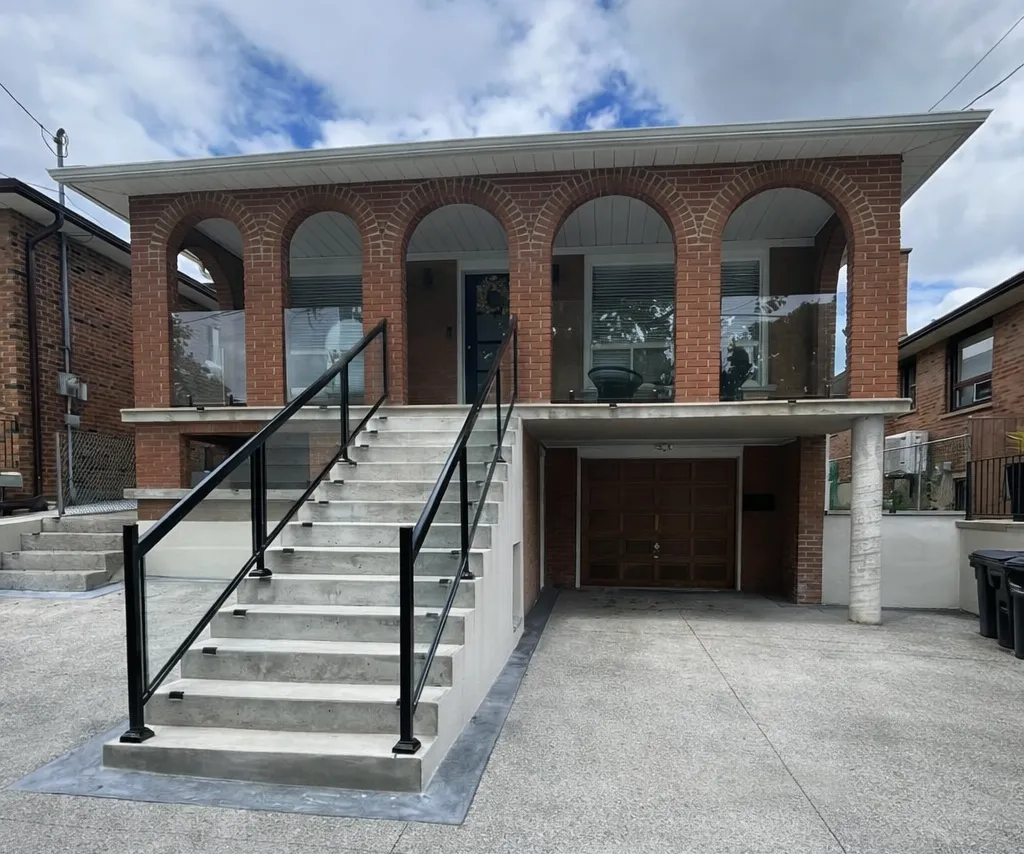
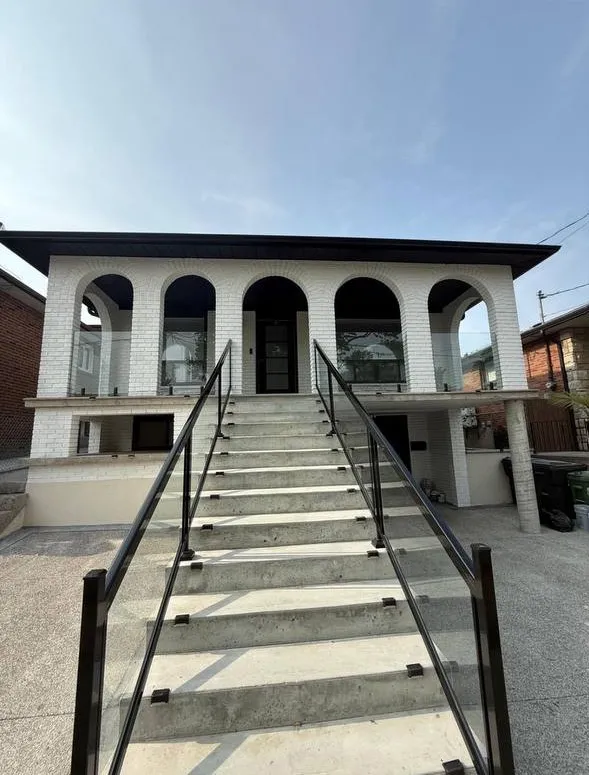
The Brick Work We Do in North York
Limewash
The oldest treatment for brick and still one of the best. Limewash is a mineral and water based coating made from slaked or hydrated lime thinned with water and brushed on. Lime is already a component of masonry mortar, so it is fully compatible with brick and does not change the wall's vapour permeability. It forms calcite crystals bonded into the masonry by absorbing carbon dioxide from the air, so it weathers instead of peeling.
Mineral paint
The modern cousin of limewash, patented in Germany in the late 1800s. Mineral paint gives an opaque, matte, single-colour finish without changing the substrate's water vapour permeability. It is UV resistant, contains zero VOCs, and its high pH resists biological growth. The industry note says mineral paints typically carry warranties of 15 years or more, with projects that have gone 30 years without recoating.
Masonry-rated coatings on brick
Bare brick set in basic mortar needs an alkaline-resistant primer or a product specifically designated for masonry, or the alkalinity eats the paint's durability. We keep the build light, because every extra heavy coat lowers the wall's permeance.
Already-painted brick, brought back
Brick that was painted decades ago and is now flaking is a different job from bare brick. We take off what is loose, work out why the coating failed, prime the bare patches, and put the lightest system back on that will cover. This is where a masonry acrylic makes the most sense, since the wall's original breathability is already compromised.
Foundations, parging and porch masonry
The parged foundation band, the porch piers and the retaining wall around them take the most splash, salt and freeze, so they age first. Ground water carrying soluble salts is a known efflorescence source on basement and retaining walls, so we check drainage before coating anything at grade.
Interior exposed brick and fireplace surrounds
Interior limewash on brick gives a soft, suede-like look. Two honest caveats. On a solid masonry wall, interior brick should be treated like exterior brick to keep the original construction's vapour permeability. And because water removes limewash over time, interior limewashed surfaces are not typically washable.
Mortar joints, sills and window surrounds
Painting brick also means dealing with the mortar joints, the concrete sills, the lintels and the wood trim that meets them. Anything failing there is a water path, and a water path becomes efflorescence, then spalling.
Why choose us
Why North York Homeowners Choose Us
We read the wall before we quote a coating
Efflorescence and staining are moisture telling on itself. The industry guidance is that these conditions get addressed before any treatment goes on, and that coating an efflorescing wall without fixing the cause can spall the brick faces.
Breathability is the whole job
Over 10 perms is vapour permeable, 0.1 and under is vapour impermeable, and brick treatments commonly land between 20 and 85 perms. We pick against that scale and keep the coats light, because multiple layers of any treatment lower its permeance.
No sandblasting, no acid guesswork
Abrasive blasting damages brickwork, and unbuffered acid cleaning is not recommended in general because it can stain or damage brick beyond repair. We start with the least aggressive method that works, usually a stiff non-metallic brush and soapy water or low-pressure washing.
Fifteen years on the tools, backed for three
Our crews average fifteen years of painting, most of it on Toronto houses, and we are rated 5.0 across 70 Google reviews. Every job carries a three-year workmanship warranty, so if something we coated fails in that window we come back and fix it.
Nine Things Worth Knowing Before You Paint Brick
- Painting brick is close to a one-way door. Some treatments are difficult or impossible to remove without damaging the brickwork, because of the bond formed with the masonry. Removal usually means a proprietary chemical stripper, not a pressure washer.
- Limewash can be undone, but only for a few days. Some limewashes come off with water within the first few days of application. One manufacturer states its limewash can be washed off immediately, and the whole application removed up to two days later with a high-force pressure washer.
- Ask about perms, not just colour. Above 10 perms is vapour permeable. Brick treatments commonly report 20 to 85. If nobody can tell you the number, that is the answer.
- More coats means less breathing. Thickness lowers permeance, so multiple layers of any treatment reduce it. Heavy applications on brick are the classic way to trap water in a wall.
- Fix the white bloom before you coat. Efflorescence means moisture is moving through the wall and evaporating at the face. Coat over it and you get adhesion failure, or worse, spalled brick faces.
- Brick is neutral, mortar is not. Brick is normally pH neutral but sits in chemically basic mortar. That is why an alkaline-resistant primer or a masonry-designated paint is recommended, not a general exterior wall paint.
- New masonry waits at least 30 days. New or repaired brick, block or parging needs to cure and dry completely before any treatment. Our exterior paint's own sheet says the same thing about new masonry.
- Glazed brick will not take limewash or mineral paint. Those products need access to the pore structure of the brick, and a glazed face is hard and effectively impermeable. A film coating over roughened glaze has very limited durability and is not recommended.
- Never let anyone sandblast your brick. Abrasive methods damage brickwork permanently. It is a one-afternoon shortcut that costs you the face of every brick on the wall.
FAQ
Brick Painting Questions, Answered
Should I paint my brick house?
It depends on the wall, not the trend. If the brick is sound, dry and free of efflorescence, a breathable treatment like limewash or mineral paint is a safe and dramatic change. If the wall is showing salts, stains or spalled faces, that moisture gets fixed first.
Is painting brick permanent?
Close to it. Some treatments bond so well to masonry that they are difficult or impossible to remove without damaging the brick, and taking one off generally needs a proprietary chemical solution rather than pressure washing. Go in expecting it to be a permanent decision.
What is limewash and how is it different from paint?
Paint sits on the surface as a film. Limewash is made from slaked or hydrated lime thinned with water, and it bonds into the masonry by forming calcite crystals as it absorbs carbon dioxide from the air. Because lime is already used in mortar, it does not change the wall's vapour permeability.
How long does limewash last?
The industry figure is five to ten years or more, depending on the exposure and how many coats went on and how weathered you want it to look. Recoating is straightforward, because prior coats do not have to be removed first.
Can limewash be removed if I hate the colour?
For a very short window, yes. Some limewashes can be taken off with water within the first few days of application. One manufacturer says the entire application can be removed up to two days later using a high-force pressure washer. After that it is there.
What is the white powdery stuff on my brick?
Efflorescence. Soluble salts in the masonry get picked up by moisture, carried to the surface, and left behind when the water evaporates. It is generally attributed to water soluble sodium, potassium and calcium. It is not a cosmetic problem. It is a moisture report, and it gets dealt with before we coat anything.
Can you paint interior exposed brick or a fireplace?
The wall and the surround, yes, and interior limewash on brick has a soft suede-like look. Two notes. On a solid masonry wall the interior face gets treated like the exterior face so the wall keeps its original vapour permeability. And treatments are not recommended inside a firebox, so we do not coat there.
Can you paint glazed or very glossy brick?
Limewash, mineral paint and stains all need to get into the pores of the brick, and a glazed face will not let them bond. A film-forming coating over roughened glaze is possible but has very limited durability, so it is not recommended. We will tell you on site if that is what you have.
How do you clean brick before painting?
The least aggressive method that works. Usually a stiff non-metallic brush with soapy water, or low-pressure washing, to take off biological growth, dirt, efflorescence and mortar smears. No sandblasting and no unbuffered acid.
How do I get a price?
Call or fill out the form and we book a free estimate. We check the wall for moisture and salts, tell you which treatments your brick can carry, and give you the number in writing before anything starts.