

Why We Do Not Publish a Price List
Search painting cost in Toronto and you get pages of averages. Cost per square foot, cost per room, cost per day. They read like answers. They are not, and here is the plain reason why. Nobody who wrote those numbers has seen your walls.
A painter who quotes you over the phone is doing one of two things. Either they are guessing high enough to cover the worst case, and you are paying for a problem you might not have. Or they are guessing low to win the job, and the number moves once they are in your hallway and see what is actually under the old paint. Both of those cost you. One up front, one halfway through.
So we do not put a price list on this page, and we will not quote you blind on the phone. What we will do is walk your rooms, measure the surfaces, look at the condition, and hand you a detailed written estimate that spells out the scope. Then you know what you are buying before anything starts. In the meantime, this page explains the drivers, so a quote from anyone stops being a mystery number.
The Square Foot Trap, and What We Measure Instead
Start with the biggest misunderstanding in every one of those searches. People ask what it costs to paint a house by floor area. Paint does not go on the floor. It goes on walls, ceilings, trim and doors, and the relationship between floor area and wall area is not fixed.
Take two North York homes with identical floor area. One is open plan, with long uninterrupted walls and a handful of doors. The other is a 1960s side-split cut into small rooms, each with a door, a closet, a window casing and baseboard all the way around. Same square footage on paper, far more cutting in and brush work in the second one. Trim and doors are the slowest surfaces in any house.
Ceiling height moves it too. Go from a standard ceiling to a raised one and every wall in the room gets taller, so the wall area climbs while the floor area does not budge. Tall stairwells and open foyers add setup on top of that, because the crew is working off ladders or staging instead of standing on the floor.
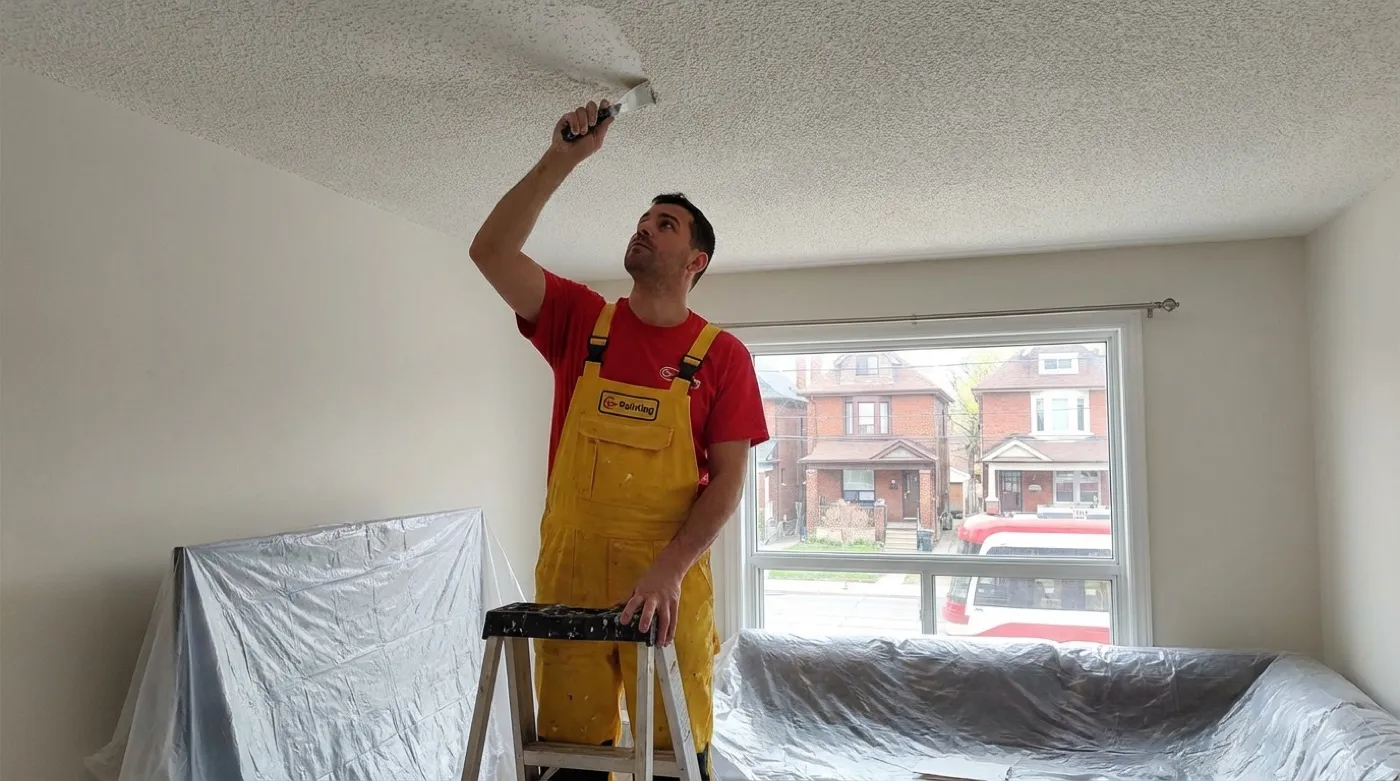
Then there is condition, the part a per square foot quote cannot see. Older plaster cracks in the same places every winter, over the door frames and where the wall meets the ceiling. Painting over them does nothing. They get cut open, filled, sometimes taped, then primed so the repair does not flash back through the fresh coat. Water stains need blocking. Old trim buried under many coats needs sanding back. None of that shows on a floor plan, and all of it is real hours.
Every Factor That Moves Your Painting Price
Wall and ceiling area, not floor area
The surfaces that get coated are what get measured. A compact home full of small rooms can carry more wall area than an open home that looks bigger. Ceilings get counted separately, because they are slow and plenty of people leave them out to keep the scope smaller.
Ceiling height and access
Taller walls mean more surface and a different way of working. Once the crew is off the floor and onto ladders or staging, every step takes longer, from cutting in to moving between walls. Stairwells and open two storey spaces are the usual culprits.
Condition, and how much prep is real
This is the honest heart of the number. Cracks, nail pops, picture holes, water stains, peeling edges, old wallpaper glue. Every one is filling, sanding and priming before a drop of colour goes on. A quote that ignores prep is hiding it, not saving you money.
Trim, doors and baseboards
The slowest square footage in the house. Baseboards, casings, crown and doors get filled at the nail holes, caulked where they have opened, and sanded before paint. Brush work, not roller work, and it takes as long as it takes.
Number of colours, and how big the change is
One colour through the whole house is efficient. A different colour in every room means more cut lines, more masking and more product. Going dark to light is the expensive direction, because it takes an extra coat or a tinted primer to bury the old colour properly.
Primer and coats
Bare drywall, fresh patches and repaired plaster all drink paint and dry to a different sheen, so they get spot primed or the wall reads blotchy under side light. Two finish coats is the norm for a colour change. A quote that promises one coat over a colour change is quoting a different job than the one you want.
Occupied or empty, and how much furniture moves
An empty house is the fastest job there is. A lived in house means moving and covering furniture, working room by room so you still have somewhere to sleep, and more setup and teardown. Not a problem, just time, and it belongs in the estimate honestly.
Condo rules and getting in the door
A unit on a high floor comes with elevator bookings, parking windows, quiet hours and a route through common areas that has to be protected. That is real time before the first wall gets touched. We price it in rather than surprising you with it.
How we quote
How We Build Your Number
We come and look
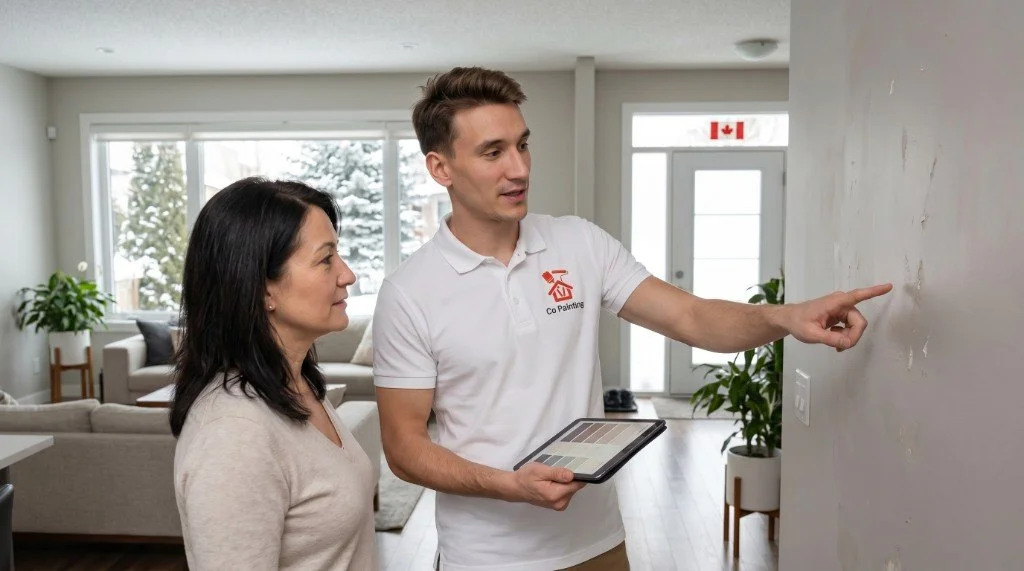
We walk the rooms with you, measure the surfaces that get coated, and look at what is under the current paint. Ten minutes in your hallway tells us more than any phone call. You point at what is bothering you, we tell you straight what it takes to fix.
You get it in writing
A detailed written estimate, with the scope spelled out. What is being painted, what prep is included, how many coats. If something is not in there, it is not in the price, and you can see that before you say yes instead of after.
Prep is priced, not skipped
Prep is where the honest cost sits, so we show it rather than bury it. Clean, sand, repair, prime. The steps that decide whether the finish lasts are never the ones we drop to win a job on price.
Backed after we leave
Our work carries a three year warranty, and up to twelve years on cabinet work. We are fully insured and licensed in Ontario. If something we painted fails inside that window, we come back and put it right.
How to Read a Painting Quote Without Getting Burned
- Compare scope before you compare price. Two quotes are only comparable if they cover the same surfaces. Ceilings, trim and closets in or out. Most of the gap between a cheap quote and a fair one is scope, not greed.
- Ask what prep is included, in words. Filling, sanding, caulking and priming should be written down. If the quote is one line and a number, you are not buying a defined job.
- Ask how many coats. One coat over a colour change looks fine wet and blotchy in a week of side light. Get the coat count in writing.
- Be wary of a price given without a visit. Nobody sees cracked plaster or old wallpaper glue through a phone. A number that arrives before anyone has looked will move later.
- Ask who is actually doing the work, and whether the same crew is there start to finish. It affects the finish and whether the whites match room to room.
- Ask for proof of insurance. Anyone doing this properly can hand it over before the first brush comes out. If that request causes friction, you have learned something useful.
- Check the warranty term and what it covers. A number on its own is marketing. Ask what happens if the finish fails and who comes back.
FAQ
Painting Cost Questions People Actually Ask
What is the average hourly rate for painters in Toronto?
There is no single rate, and an average will not help you. An hourly number means nothing until you know the crew size, the pace, and whether prep and cleanup sit inside that rate or get billed on top. We price the job in writing instead.
What's the average cost to paint a 2000 ft house?
Floor area is the wrong unit. Paint goes on walls, ceilings, trim and doors. Two homes of the same size can be very different jobs, one open plan, one cut into small rooms full of doors and baseboard. We measure the surfaces that actually get coated.
What is the average cost of painting a whole house in Toronto?
Depends what whole house means. Walls only, or ceilings too. Trim and doors in or out. Inside only, or the exterior as well. Then condition, because a house that needs cracks cut open and stains blocked is a different job. Tell us the scope and we will price it.
How much does it cost to paint a 1500 sq ft house?
The square footage tells a painter almost nothing on its own. What counts is the wall and ceiling area it produces, how many doors and how much baseboard run through it, and what shape the surfaces are in. Repairs and a dark to light change move it most.
What does it cost to paint a 1000 sq ft house?
A thousand square feet can be a bungalow or a condo, and they price differently. The condo brings elevator bookings, parking windows and a scheduled load in. The bungalow brings older plaster, thicker trim and layers that need sanding back. Same floor area, different work.
How much should it cost to paint 1000 sq ft?
First question back is a thousand square feet of what. Flat open wall is quick, clean work. The same area spread across small rooms, stairwells, closets and trim is slow, with a lot of cutting in. Ceiling height changes it again.
How much do painters charge per hour in Toronto?
Some charge hourly. Most price the job, and there is a good reason. Priced work puts the risk of running long on the painter instead of you, and nobody gains from going slow. Ask what is included before you compare rates, because that is where the difference hides.
How much to paint a 1500 sq ft house exterior in Canada?
Exterior runs on different drivers. What the cladding is, whether brick, stucco, wood or aluminum. How many storeys, and whether the crew works off ladders or needs staging. How much washing, scraping and priming comes first. And the season, because exterior work has a weather window here.
How much should it cost to paint the interior of a 2000 sq ft house?
Scope first, then condition. Ceilings in or out changes it a lot, because ceilings are slow and unforgiving. Trim and doors change it again. Then whether you are living there, how much furniture moves, and how many colours are going on. All of that belongs in writing.
What is the average cost of painting an interior house in Toronto?
An average here blends a new condo with a postwar house painted four times already, so it describes neither. Prep is the swing factor. Patching, sanding, caulking and priming are where the hours go. Same size, different wall condition, two different prices.
How much does it cost to paint a 1000 square foot house interior in Canada?
It moves with the market and with the house. Even inside one city you will see a wide spread, because paint goes on walls, not floors. Count the wall and ceiling surface, add the trim and doors, then look at the repair work underneath. We will walk it with you.
How much should a 12x12 room cost to paint?
Even the simplest room has questions attached. Ceiling in or out. A closet, and does the inside get painted. How many doors and how much baseboard. Colour change, or a refresh in the same shade. Trim and cutting in are what slow a small room down, not wall area.
How much should I pay a painter per day?
A day rate on its own tells you nothing. One painter for a day and three painters for a day are very different amounts of work, and a day rate rewards nobody for being quick. Get the job priced instead, with the prep spelled out.
How much does a painter charge in Toronto?
Three things. Scope, meaning how much surface gets coated and how many coats it needs. Condition, meaning how much patching, sanding and priming comes first. Access, meaning ceiling height, storeys, elevators and furniture. Give us those and we will give you a real number in writing.
How much does a painter charge per hour in Ontario?
Rates vary across the province and between crews, so the number alone is not comparable. What is comparable is what it covers. Ask whether prep, masking, primer, the second coat and daily cleanup are included, and whether the painter is insured. That gap shows up on your walls.