
Need Wallpaper Removal in North York?
Most of North York went up in the two decades after the war, and the wallpaper came with it. Ranch bungalows, side-splits and split-levels filled in through the 1950s and 60s on 50 to 60 foot lots, in Bathurst Manor, Don Mills and Parkwoods. By the 1970s and 80s their dining rooms, powder rooms and stair walls were papered, and a lot of it is still up.
So the calls are consistent. A floral border along a hallway ceiling. Textured vinyl gone yellow above a stove. A dark dining room that eats the light. And the one nobody expects, a wall where somebody painted straight over the paper, which you find out when the roller lifts a seam.
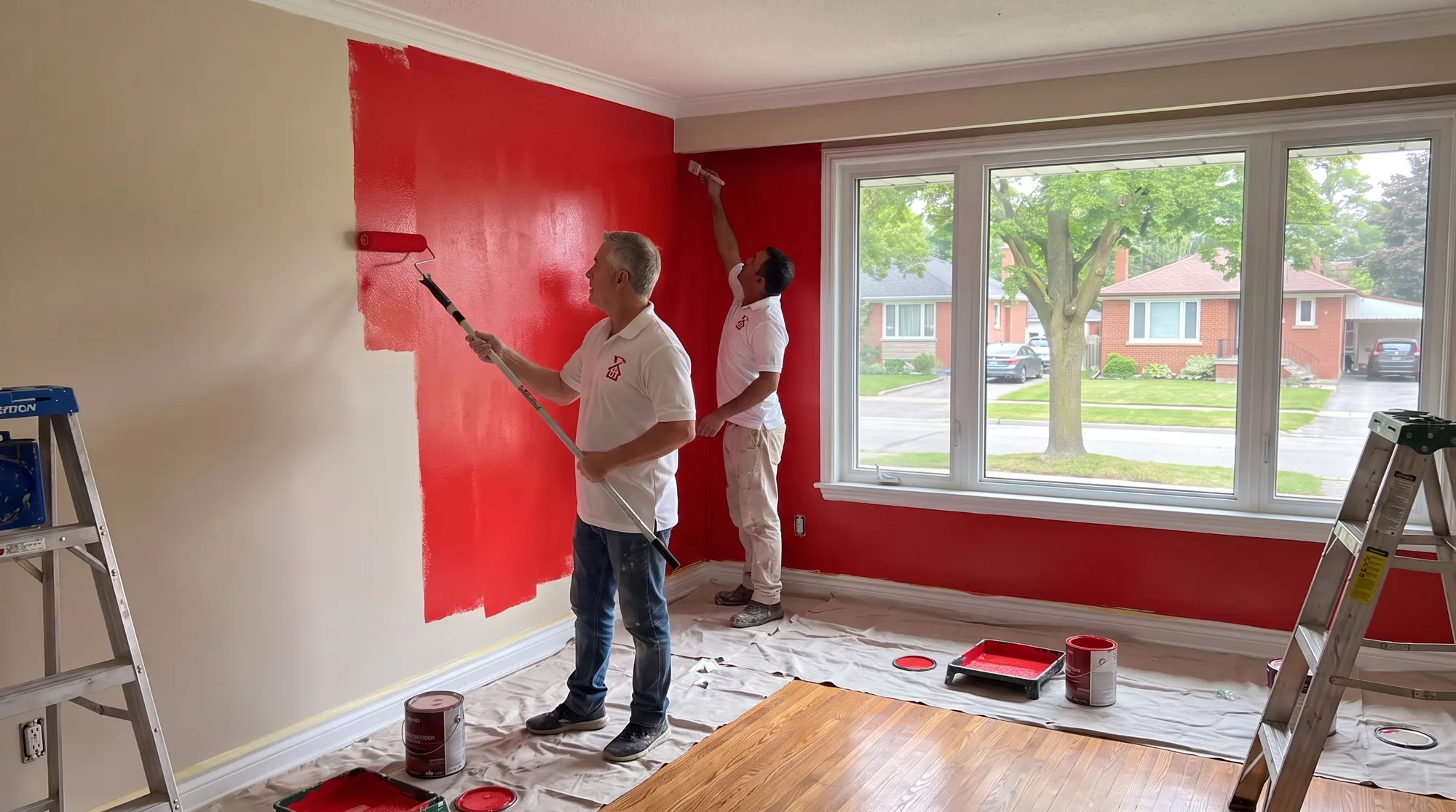
Removal is messy work. Steam, water and softened adhesive turn a room into paste unless the floors, trim, vents and outlets are covered first. We seal the room off, and the stripped paper leaves with us.
The wall is almost never paint-ready when the paper is down either. Glue residue, torn drywall face and old plaster cracks all need work first, so we quote strip, repair and paint as one job.
What Wallpaper Removal Actually Takes
We start with a test patch, not a scraper. Slide a putty knife under a seam and lift. Peelable paper comes away by hand, usually leaving a backing that still has to be soaked off. Strippable and non-woven papers release cleanly once scored and wet. Vinyl fights you: the skin sheds water, so nothing reaches the adhesive until it is perforated.
The test tells us more than the paper type. If brown paper comes off with the wallpaper, the paste went straight onto unprimed drywall and is bonded to the panel's own face paper. That was ordinary practice in a lot of 1980s and 90s work, and it decides whether this is a strip job or a strip and full-skim job.
What is behind the paper changes the tools. The oldest North York houses have plaster over lath, which is thick and hard, so a steamer suits it. Drywall is the opposite: steam floods a panel faster than the gypsum core can cope with, and you get bubbling and warped board. On drywall we use warm water, a stripping solution and dwell time instead.
Then the adhesive, the step most weekend jobs skip. Older papers went up on wheat and clay-based pastes that harden over decades and shrug off plain hot water. We wet the wall, give the solution about fifteen minutes to reach the glue, work it off in sections, then rinse. Paint over the residue and the water in the fresh paint softens it again, so the new finish lets go in sheets.
Torn face paper gets sealed before anything is filled. Exposed drywall paper is soft and drinks paint like a sponge, and compound spread onto it bubbles as the moisture soaks in. A penetrating sealer, Zinsser Gardz or Roman's PRO-999 Rx-35, hardens those fibres first. Rx-35 is dry in three to four hours and we give it overnight.
Then the skim coat. A stripped wall wants what drywall finishers call a Level 5, a thin coat of compound across the whole face, not the Level 4 tape-and-fasteners finish a builder leaves. Bare gypsum, sealed paper and filled tears drink paint at different rates, so we skim the lot, sand it, then prime the whole wall so the colour cannot flash under side light.
The repaint side of it sits with the rest of our painting work across North York, and we do plenty of it in the older houses around Bathurst Manor and the split-levels in Parkwoods.
Wallpaper Services in North York
Paper comes off a wall in a few different situations, each prepped and priced differently.
Full room stripping
Floors, trim, outlets and vents get covered, the paper is scored and wet in sections, and it comes off in strips instead of confetti. A bedroom usually runs one to two days.
Painted-over wallpaper
Somebody rolled paint over the paper to save a weekend, and now the seams lift and the edges curl. The paint film seals the surface, so no water reaches the adhesive until it is perforated. We score through it, wet it in stages, and take both off.
Glue removal and wall repair
The part that decides how the room looks a year from now. Residual paste is washed off and rinsed, torn face paper is sealed, and tears and old plaster cracks are filled and feathered. Then a full skim and a sanding, so the wall reads flat.
Prime and paint after removal
One crew takes the room from paper to finished colour. The whole wall gets primed after the skim, not just the repairs, so the topcoat sits on one surface. Then two coats of low-odour paint, cut clean at trim and ceiling.
Border and accent removal
A border at the ceiling line or above a chair rail is its own small job, and the trick is lifting it without wrecking the painted wall above and below. We keep it wet, hold the scraper flat, then fill, sand and touch in the band it leaves.
Condo and rental units
Units around Yonge, Sheppard and North York Centre come with elevator bookings, work-hour rules and a neighbour behind every wall. We book the elevator, protect the corridor and floors, keep the water contained, and hand back a move-in ready suite.
Wallpaper installation
When you want pattern back on one wall, we hang it. The wall is skimmed and primed with a wallcovering primer first, which seals it, gives the paste something to grip, and means the paper bonds to the primer rather than the wall. Whoever takes it down next is not fighting the drywall. Seams get matched off a plumb line, because corners in a 1950s bungalow rarely are.
Why choose us
Why North York Homeowners Choose Us
We test before we tear
Every job opens with a test patch, so the paper is identified as hung on primed or bare drywall before the quote is written. Canada did not limit lead in paint until 1976, so we treat the old layers in any pre-1980 home as lead-bearing and prep wet. Lead is a designated substance in Ontario under O. Reg. 490/09, which is why the method is not a judgement call.
We never paint over glue
Leftover adhesive is why a repaint peels a year later. The wall gets washed, rinsed and dried, and torn paper sealed before compound touches it. The paint on top is low-VOC and low-odour, so you are back in the room quickly.
The mess stays in the one room
Stripping puts water, steam and softened paste everywhere unless somebody plans for it. Floors, furniture, trim and outlets get covered, the debris leaves daily, and we are 100% insured and licensed in Ontario.
Fifteen years on the tools, backed for three
Our crews average fifteen years of painting and wall prep, and we are rated 5.0 across 70 Google reviews. The work carries a three-year warranty. If something we painted fails, we come back and make it right.
What Changes the Time and the Price
Two rooms the same size can be a day and a half apart, and it is almost never about the size. In a house that has changed hands it is normal to find two or three papers stacked up, each with its own adhesive, and every layer is another pass. Then whether the wall was primed. Paper that lifts off a primed wall needs a light skim. Paper that took the drywall face with it means a full skim on every wall. Paper type counts too: peelable and non-woven come away fast, vinyl has to be scored, painted-over paper is slowest.
Then the room. Stair walls mean staging, textured papers need more washing, and in a condo the building's hours set the pace as much as the wall does.
We price it after the test patch, not over the phone, and the number is in writing before we start. Call (416) 319-8444.
Nine Things Worth Knowing Before You Remove Wallpaper
- Test a seam before you buy anything. What lifts tells you whether you need a scoring tool, a steamer, or just warm water.
- Score vinyl, do not attack it. The tool wants light pressure and its own weight. Lean on it and you are cutting the wall.
- Keep it wet, then wet it again. The solution needs about fifteen minutes to reach the glue, and a section that dries out is soaked from scratch.
- Go easy with a steamer on drywall. Steam suits old plaster and lath. On drywall it soaks the core faster than the panel can handle, and warped board is the bigger repair.
- Kill the power before the water. Tape the outlets, turn the breaker off, and remember water runs down inside the box.
- Rinse the glue, do not just scrape it. Adhesive you cannot see is still adhesive. Wash, rinse and let it dry before you judge it.
- Seal torn paper before you fill it. Bare face paper soaks up compound unevenly, so a sealer hardens it first and the repair disappears.
- Plan a full skim, not spot patches. Sealed paper, bare gypsum and fresh compound take paint differently, and side light finds every one.
- Book the paint with the strip. One crew, one schedule, and whoever skimmed the wall has to make the paint look right.
FAQ
Wallpaper Removal Questions, Answered
Can you remove wallpaper without damaging the drywall?
Most of the time, yes. The risk is paper hung on unprimed drywall, because the paste is stuck to the panel's own face paper and some of it lifts however careful you are. A test patch tells us before we quote, and either way the wall ends up sealed, skimmed and sanded flat.
My wallpaper has been painted over. Can you still get it off?
Yes. The paint film seals the paper, so water cannot reach the adhesive until we perforate it with a scoring tool. After that it comes off in layers. It is slower than a plain strip and the quote says so.
How long does wallpaper removal take?
A bedroom or dining room usually runs one to two days for the strip and the skim, plus drying time before paint. A whole house depends on how many rooms are papered, how many layers are on the walls, and whether the drywall was primed first.
Do you have to skim coat the whole wall?
Usually, yes. A stripped wall is a mix of bare gypsum, sealed paper and filled tears, and each takes paint at a different rate. A full skim and a primer over the whole wall stops the finish looking blotchy. The sealer and compound need drying time too, so we quote strip, skim and paint as one job.
Do you install new wallpaper too?
Yes, usually on a single accent wall once the rest of the room is painted. We skim and prime with a wallcovering primer first, which helps the paste grip and makes the paper easier to take off next time.
Is removal safe on old plaster walls?
Plaster over lath handles steam better than drywall, so it is usually the easier surface. The care goes into the paint underneath. Canada did not limit lead in paint until 1976, so on any pre-1980 home we seal the room and prep wet rather than sanding dry.
Do you work in condos?
Yes, including the buildings around Yonge, Sheppard and North York Centre. We book the service elevator, work inside the building's hours, protect the corridor, and keep the water and debris in the suite.
Is there a warranty on the paint after?
Yes, three years on the workmanship when we do the full prep and the finish. We are fully insured and licensed in Ontario.
How do I get a price?
Call (416) 319-8444 or fill in the form and we book a free estimate. We do a test patch on site, look at the paper type and wall condition, and give you the number in writing.