
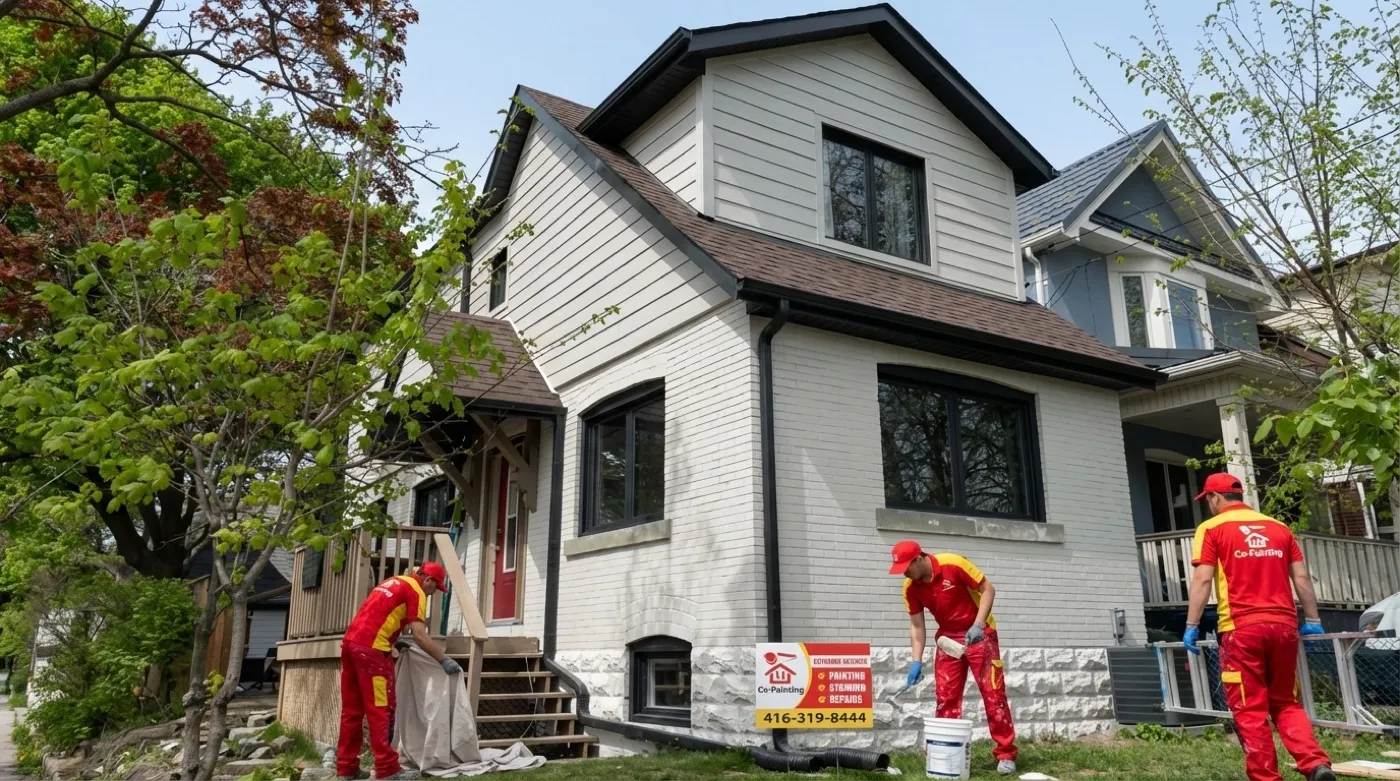
Need a House Painter in North York?
Most of North York went up in one long stretch after the war, and that decides what a painter walks into. In Parkwoods-Donalda, 29% of the homes were built before 1960 and another 55% between 1961 and 1980. Don Valley Village is even more concentrated, with 69% of its homes from that same 1961 to 1980 window. Around York Mills, St. Andrew-Windfields is 51% single-detached, more than double the 24% figure for Toronto as a whole. Those are City of Toronto neighbourhood numbers, not a sales line, and they tell us what era of build to expect before we quote.
The other half of the area is the opposite. Willowdale East has only 7% of its homes from before 1960, and 26% of them went up between 2001 and 2005. So one week we are cutting in painted plaster in a Bathurst Manor bungalow, and the next it is builder-grade drywall in a house barely twenty years old. Older or newer, the order is the same. Fix what is wrong with the surface, then paint it.
What a North York House Actually Takes
The colour is the easy part. Most of a house painting job happens before the finish coat, and that is the part a cheap quote leaves out.
Start with lead, because so much of the local housing stock predates the rules. Canada's 1976 Liquid Coating Materials Regulations were the first to cap lead in interior consumer paint, and the cap was 5,000 mg per kg. It did not fall to 600 mg per kg until 2005, or to 90 mg per kg until 2010. So we treat any home built before 1980 as lead-bearing, inside and out. Old paint is only a hazard when somebody sands it dry and puts the dust in your air. We seal the area, prep wet, and clean as we go. The Ontario guidance on lead health effects is the reason we work that way and not the fast way.
Inside, plaster cracks come back every winter in the same places, over door frames and where the wall meets the ceiling. Painting over them does nothing. We cut them open, fill them, tape the ones that keep moving, and prime the patch so it does not flash through the finish a month later. Outside, the caulk is usually what failed first. The acrylic latex caulk we use has its own limits printed on the sheet. Apply above 40 F, roughly 4 degrees Celsius, nothing when rain or freezing temperatures are forecast in the next 24 hours, and backer rod in any joint deeper than half an inch instead of burying it in sealant.
Exterior paint has a floor too, and it is not a matter of opinion. The Benjamin Moore Aura exterior product data sheet says do not apply it when air or surface temperatures are below 35 F, about 2 degrees Celsius, and it warns that cool damp weather stretches the four-hour recoat window. That is why we book outside work in the warm half of the year and keep interiors moving all winter. Two more rules from the same sheet: the surface has to be free of chalk, mildew and loose paint before anything goes on, and new masonry gets 30 days to cure before it sees primer. If you want the short version of everything we handle, our North York painters page lays out the full list.
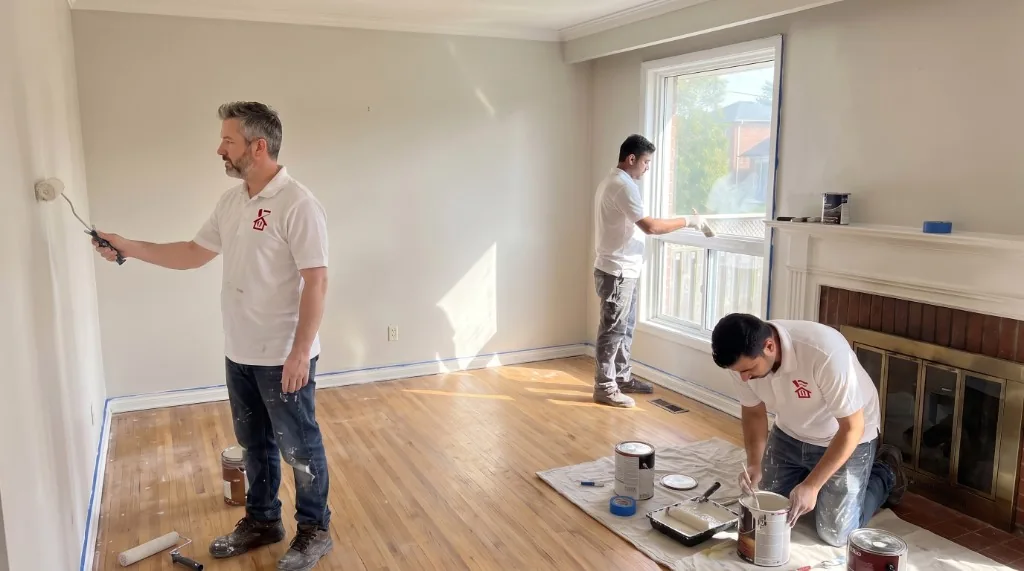
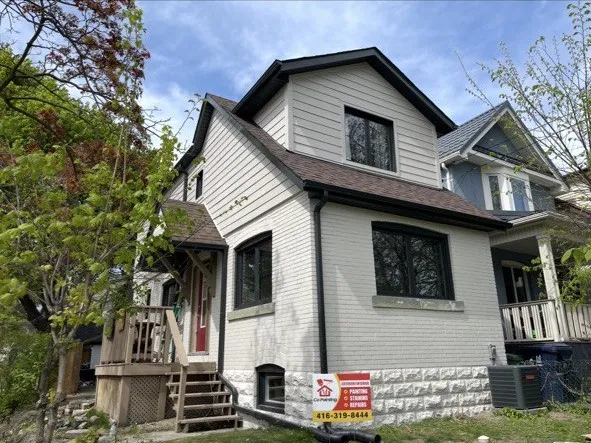
The House Painting We Do in North York
Whole-home interior repaints
The full inside of the house as one project. Walls, ceilings, trim, doors and closets, sequenced so you can keep living there while we work. One crew start to finish, so the whites match room to room and nothing looks patched in later.
Full exterior repaints
Siding, brick, trim, fascia, soffits, porch ceilings and doors, washed and prepped before a drop of finish goes on. Protected areas like eaves and overhangs get washed and rinsed separately, because that is where the contaminants hide. Two coats on any bare substrate, which is what the data sheet calls for.
Brick and masonry
Painting brick is a different trade from painting wood, and doing it wrong traps water in the wall. Brick is close to pH neutral but sits in mortar that is chemically basic, so it wants an alkaline-resistant primer or a coating designated for masonry. We also look for efflorescence, the white salty bloom. It signals excess moisture, and that gets fixed before anything is coated.
Siding
Wood, hardboard, fibre cement, aluminum and vinyl all take paint, and each one has a rule you cannot skip. On vinyl the big one is colour. Benjamin Moore's own sheet says do not paint vinyl any colour darker than the original, or with a Light Reflectance Value under 55, outside an approved palette, because a darker colour absorbs more heat and the siding can warp. On aluminum, chalky oxidised film has to come off first or the new coat bonds to powder.
Trim, doors and baseboards
Baseboards, casings, crown, railings and doors get filled at the nail holes, caulked where they have opened up, and sanded before paint. Glossy old alkyd trim gets dulled first, because sanding is what gets the new coat to grip. We finish in a harder enamel that wipes clean.
Ceilings, and the drywall under them
Ceilings are where a rushed job shows from the couch. We block water stains so they do not bleed through, patch and prime the repairs, cut a clean edge at the wall, and roll a flat finish that scatters light instead of pointing at every dip.
Colour picked on your wall, not on a chip
Choosing a colour off a card in a store is how people end up painting twice. We put big samples on the actual wall so you can watch them shift from morning to evening before you commit. Outside, we work off the brick and the roof, because those two are not changing.
Why choose us
Why North York Homeowners Choose Us
Every pre-1980 house gets treated as lead-bearing
Canada's first cap on lead in interior consumer paint came in 1976, and it was still 5,000 mg per kg. Anything built before 1980 around here can carry it in the lower layers. We contain, prep wet and clean up as we go rather than finding out halfway through. Nobody itemises that on an invoice. It matters anyway.
We paint to the product's numbers, not the calendar
The exterior paint we use is not to be applied below 35 F. It wants four hours between coats in good conditions and longer when it is cool and damp, and it should not be washed for two weeks. We follow those numbers even when it costs us a day, because that is the difference between a finish that lasts and one that peels in year three.
Clean crews, insured, and licensed in Ontario
Floors and furniture get covered, the site gets cleaned every day rather than only at the end, and we walk the finished job with you before we call it done. Fully insured and licensed in Ontario, paperwork on request.
Fifteen years on the tools, backed for three
Our crews average fifteen years of painting, most of it on Toronto houses, and we are rated 5.0 across 70 Google reviews. Every job carries a three-year workmanship warranty, so if something we painted fails inside that window we come back and fix it.
Nine Things Worth Knowing Before You Paint a House
- Prep is the job. Paint is the last ten percent. Washing, filling, sanding, caulking and priming are what separate a wall that looks smooth from one that just looks painted.
- Fix the water before the paint. A stain on a ceiling or a white salty bloom on brick is telling you moisture is getting in. Coat over it and you have hidden the evidence, not the problem.
- Respect a pre-1980 house. Canada did not cap lead in interior paint until 1976. Do not let anyone dry-sand old layers in your living room. It gets contained and prepped wet, or it does not get done.
- Chalk has to come off. If old paint leaves powder on your hand, that powder is the surface a new coat would stick to. The paint maker's own prep spec says clean, dry and free of chalk, and it means it.
- Watch the thermometer, not the calendar. The exterior paint we use has a hard floor of 35 F for both air and surface. A warm afternoon in November does not count if the siding is still cold.
- Caulk has its own rules. Above 40 F, nothing when rain or frost is coming inside 24 hours, and backer rod in any joint deeper than half an inch. Sealant squeezed into a deep gap just cracks later.
- Two coats on anything bare. The data sheet is explicit. Bare substrates need two coats. Previously painted surfaces can sometimes take one or two, which is a judgement call we make on site, not in the truck.
- Give new masonry a month. New brick, block or parging needs about 30 days to cure before primer. Paint it early and you are coating a surface that is still chemically busy.
- Wait two weeks before you wash it. Paint feels dry in hours but keeps hardening for weeks. Go easy on scrubbing, hoses and heavy contact until then.
FAQ
House Painting Questions, Answered
How long does it take to paint a whole house in North York?
Inside, most whole-home repaints run several days to about a week, depending on the size and how much repair the walls need. A full exterior is usually a similar stretch in good weather. We give you a real timeline with the written estimate rather than a guess on the phone.
Can you do the inside and the outside in the same project?
Yes, and it is often the cheaper way to do it. We run the exterior in the warm months and the interior around it, because outside paint has a temperature floor and inside work does not.
My house is from 1958. Should I worry about lead paint?
Canada did not cap lead in interior consumer paint until 1976, so any home built before 1980 can have it in the older layers, and a lot of North York fits that. It is only dangerous if someone sands it dry and spreads the dust. We seal the area and prep wet so it stays out of your air.
How late in the year can you paint the outside?
The exterior product we use is not to be applied when air or surface temperatures are below 35 F, roughly 2 degrees Celsius, and cool damp weather makes it dry slower between coats. In practice that means the outside season closes some time in the fall, and we will tell you straight if it is too late rather than take the deposit.
Do you paint brick and siding, or only wood?
All of it. Brick, stucco, wood, hardboard, fibre cement, aluminum and vinyl. Each one gets a different prep and a different primer, and vinyl also has a colour limit, because a colour darker than the original absorbs more heat and can warp the siding.
Do you fix cracks, holes and water stains before painting?
Yes, and older homes almost always need some of it. We patch the holes and cracks, tape the ones that keep moving, block the stains, then sand and prime so the repair disappears under the colour.
How soon can I wash the new paint?
Give it two weeks. That is what the manufacturer specifies, and it is the same reason we ask you to go easy on scrubbing and heavy contact for the first little while.
Do I have to move out while you paint?
Almost never. We work room by room so you keep a place to sleep and cook, and we use low-odour paint.
What does the three-year warranty cover?
Three years on our workmanship. It does not cover damage from a new leak, a failed roof, or somebody else's repair.
How do I get a price?
Call or fill out the form and we book a free estimate. We look at the actual walls, then give you the number in writing before anything starts.