
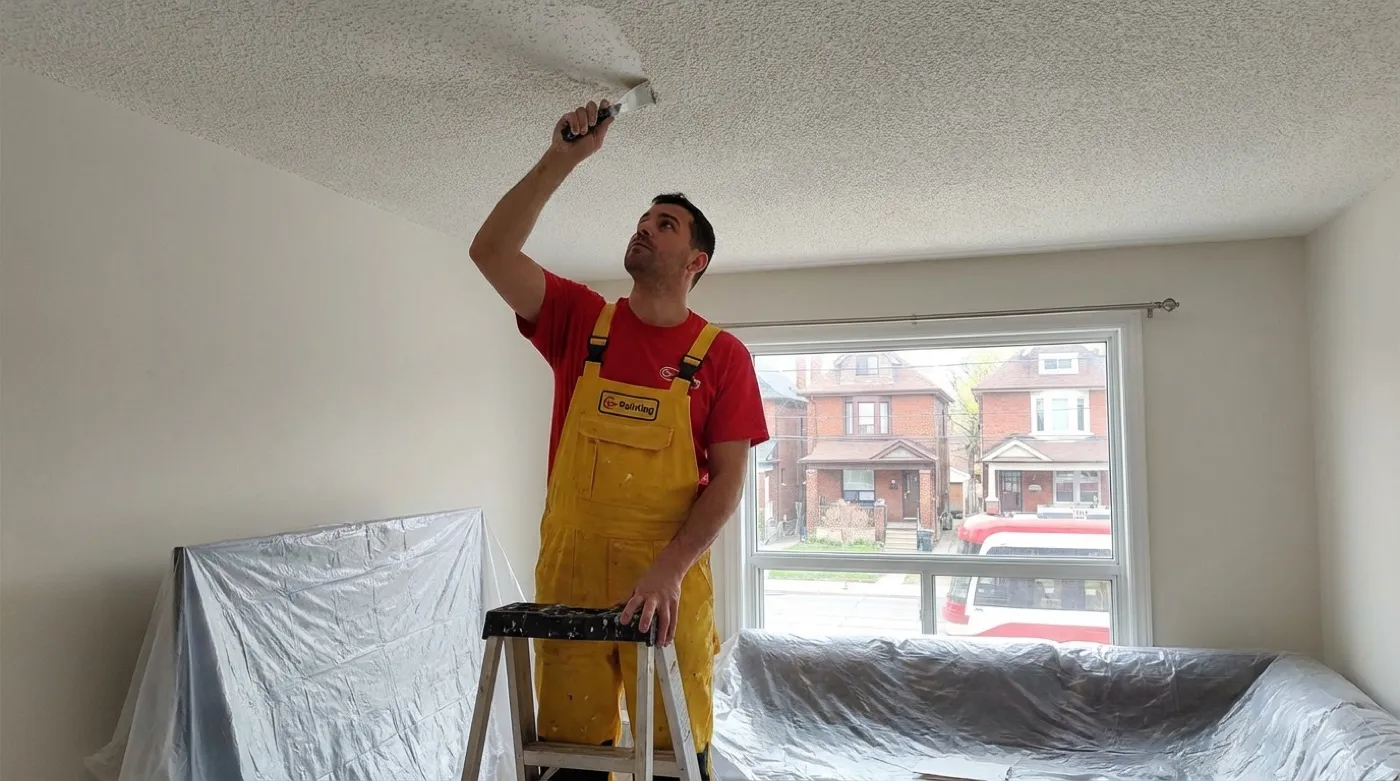
Need a Church Painter in North York?
A church is one of the harder buildings on a block to repaint, and the paint is the smallest part of why. The room has to be usable on Sunday. The budget comes out of a congregation's giving and gets approved by a committee. The ceiling sits well past ladder height. And almost nothing in the room moves. Pews are fixed down, the organ is staying put, and the plaques belong to somebody's family.
North York's church buildings mostly go back to the same postwar decades as its houses. Plaster over lath or over block, solid wood trim on its fifth or sixth coat, hollow metal doors in the stairwells, and a hall downstairs painted more times than anyone has a record of. Any coating older than 1976 can carry lead, because that is the year Canada first capped it in interior paint.
Then there is the second building inside the building. Most congregations here lend or rent the hall out. Daycare in the morning, scouts and choir at night, a food bank on the weekend. The sanctuary might be quiet on a Tuesday. The hall almost never is, so we plan the two as separate jobs.
What a Church Repaint Actually Takes
The colour is the easy part. In a church the work gets judged on what you protected, how little dust you made, and whether the room was ready when you said it would be.
Start with what is already on the wall. Ontario's lead guideline classifies the work, not the building. Rolling a lead-bearing coating is Type 1. Scraping or sanding it by hand is Type 2a. Power sanding without HEPA collection jumps to Type 3a. In a mid-century sanctuary that means we encapsulate what is sound and wet-sand what is not.
Asbestos gets settled before a scraper touches anything. In Ontario the owner keeps a record of asbestos containing material, and work that could disturb it falls under O. Reg. 278/05. Textured ceilings, old plaster, and boiler room pipe insulation are the usual places. If nobody has looked, that happens before we book dates.
Plaster is the next layer. Lath and plaster cracks along the same lines every winter, over door heads and down tall corners. Painting over them buys a season. We cut the cracks open, fill, tape what keeps moving, skim flat, and prime the repair so it does not ghost through the finish coat. On a sanctuary wall that plaster repair is most of the labour, and scuffed board in the hall gets drywall repair first.
Water stains are a warning, not a blemish. A ring under a steeple or at the top of a stairwell means water has been getting in. We block it with a stain-killing primer so it does not bleed back through, but the roof or the flashing gets dealt with first or the ring returns in the same shape.
Height is what turns a normal repaint into a church job. A vaulted ceiling, a balcony face, a stairwell three floors tall. That is staging, towers, or a lift, and Ontario requires working at heights training for crews using fall protection. It also puts the room out of use while the equipment stands, which is why sequencing gets agreed before colour.
Then there is everything we do not paint. Stained glass and its lead came, the organ and its pipes, plaques, brass, pews, and the millwork on the pulpit and rail all get masked and covered. Where woodwork is already painted we repaint it in an enamel that takes hands and hymnals. Where it never was, we leave it alone.
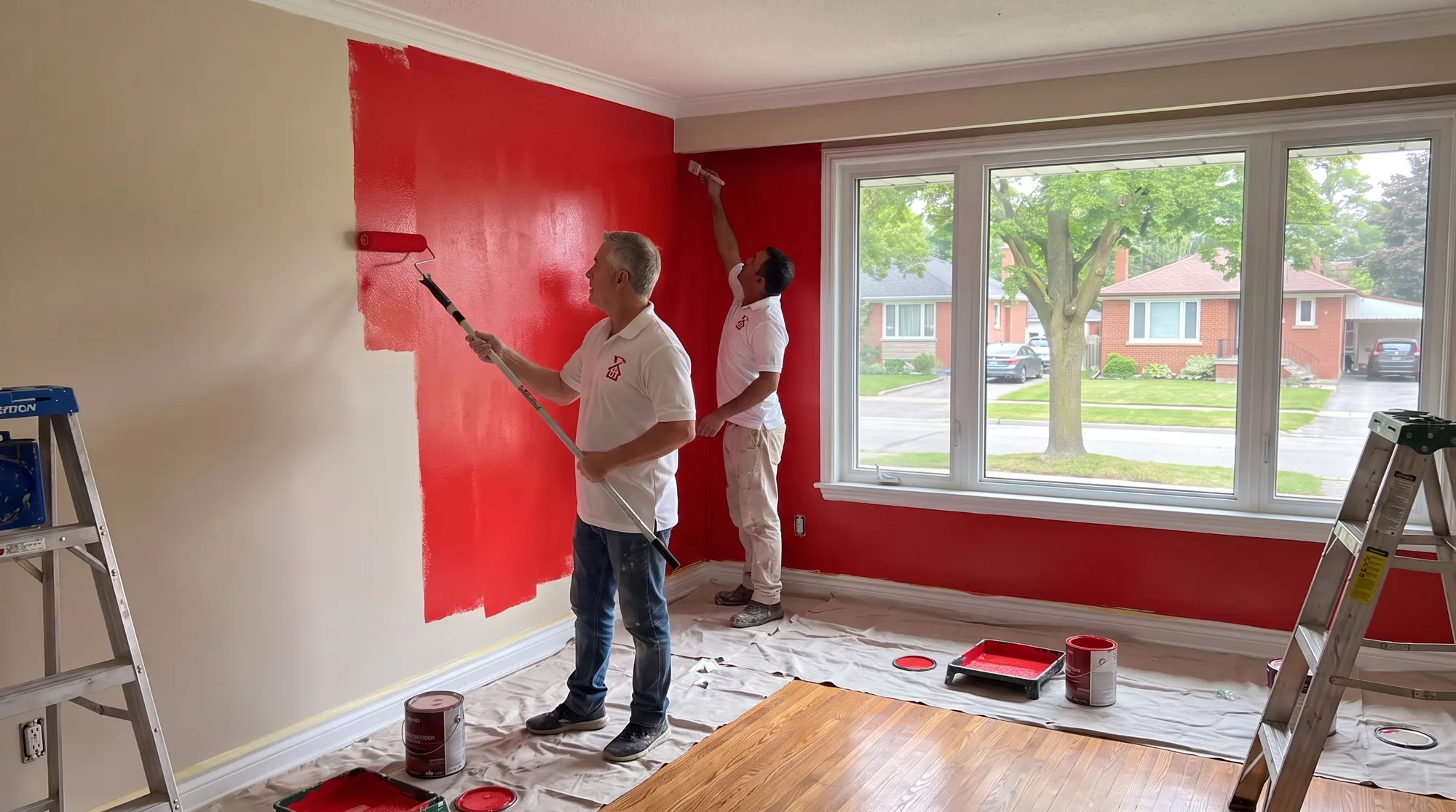
Working Around Services, Weddings, and Funerals
Every church runs on a calendar somebody else set, and a funeral does not give two weeks of notice.
The sanctuary has the least slack in it. Most congregations can give up a Sunday, or move downstairs for one, but not for a month. So we break the room into stages that each end clean. One wall bay, the balcony, the chancel, the ceiling. Every stage gets set up, finished, and struck, so the room is usable even when we are back on Tuesday.
Cure time drives that more than drying time does. Paint is dry to the touch in hours and still hardening weeks later. A pew slid back against a fresh wall that night will print into the film. We set the return-to-service time by the product's cure and say it out loud at the estimate.
Halls and classrooms are the opposite problem. Booked most nights, but booked weeks ahead, so we take the room in the gaps the calendar already has. Same way we work a condo turnover, an occupied office, or a clinic or school.
Paperwork is part of the schedule too. A property committee or a diocesan office usually wants a certificate of insurance before anyone is on site. We are fully insured and licensed in Ontario, and that certificate goes over before the dates are locked. And if the building is on the city's heritage register or designated under the Ontario Heritage Act, exterior alterations can need a heritage review first. We ask that at the estimate, not halfway up the scaffold.

The Church Painting We Do in North York
Sanctuaries and worship spaces
The main room, from the back wall to the chancel. Wall bays, the balcony face, plaster repair, and the trim around the windows. We mask the glass, the organ, and the pews before anything opens, and stage the room so it stays usable between visits.
High and vaulted ceilings
The part most quotes work around. Vaulted ceilings, coffers, and the flat plaster above a balcony need staging or a lift, plus a flat finish that scatters light instead of lighting up every wave and seam. See our ceiling painting.
Plaster repair and skim coating
Old lath and plaster opens in the same places every winter. We cut the cracks out, fill, tape what keeps moving, skim the wall flat, and prime the repair so it disappears under the colour instead of reappearing through it.
Church halls, classrooms, and nurseries
The busiest rooms in the building. Halls, Sunday school rooms, and meeting rooms take chairs, tables, and traffic, so they get a washable finish and a schedule built around whoever uses the room. If a parlour still has wallpaper from a past decade, that comes off first.
Kitchens, washrooms, and coffee areas
Grease, steam, and hands on the wall. We prime the stained spots and use a paint made to be wiped down. If the hall kitchen cabinets are tired too, we prep, prime, and paint those, the same work as our cabinet refinishing.
Stairwells, corridors, and entries
Tall, narrow, and the first thing a visitor sees. Stairwells need proper access and a finish that takes a shoulder against the wall. Ask before anyone specifies a wall covering in an exit corridor, because interior finish there has a flame-spread rating to meet.
Doors, trim, railings, and millwork
Hollow metal doors and frames on their sixth coat, handrails, baseboards, and painted millwork. Nail holes filled, joints caulked, everything sanded, then an enamel that wipes clean. More on trim and moulding.
Church exteriors
Doors, trim, soffits, fascia, railings, and masonry that is already painted. Exterior work waits for the warm stretch, so book it in winter and paint it in summer. Masonry that has never been painted is a decision you make once, so we talk it through first.
Why choose us
Why North York Congregations Choose Us
We work to your calendar, not ours
Services, weddings, funerals, daycare, choir, and whoever rents the hall all sit on one calendar. We break the job into stages that each end clean, so the room is usable between visits and a funeral on two days of notice does not become a crisis.
Old buildings get prepped properly
Pre-1976 paint can carry lead and old plaster can carry asbestos. We treat both as questions to answer before the quote, not surprises to find in week two. Sound coatings get encapsulated, the rest gets prepped wet, and the dust stays out of the room.
Height work planned first
Vaulted ceilings, balcony faces, and three-storey stairwells need staging, towers, or a lift, and Ontario's rules on working at heights apply to anyone using fall protection up there. We settle access before colour, because access decides how long the room is out of service.
Insured, warranted, written down
We are fully insured and licensed in Ontario, and the certificate reaches your property committee before we are on site. The estimate arrives as a written scope with stages and dates a committee can read in a meeting. Workmanship carries a three-year warranty.
Nine Things Worth Knowing Before You Paint a Church
- Fix the water before you fix the paint. A stain under a steeple or at the top of a stairwell means water got in. Primer hides it for a season. The flashing is the actual repair.
- Find out what is under the coating first. Pre-1976 paint can hold lead, and old plaster and textured ceilings can hold asbestos. That answer changes the method, the price, and the dates.
- Prep is the job. On a plaster sanctuary wall the filling, taping, skimming, sanding, and priming is most of the labour. The paint is the last part.
- Prime every patch. Fresh filler and bare plaster drink paint and dry to a different sheen. Under a tall window an unprimed patch reads from the back pew.
- Split the building into stages. A sanctuary, a hall, a stairwell, and a kitchen are four jobs on four calendars. Bidding them as one lump is how a church ends up closed far longer than it needed to be.
- Ask about cure, not just dry. Paint is dry in hours and hardening for weeks. Pews and tables pushed back too early leave marks in the film.
- Flat on the ceiling, enamel on the trim. Flat scatters light and hides the waves an old ceiling always has. Enamel on doors, rails, and baseboards takes hands, hymnals, and vacuum cleaners.
- Sample on the actual wall. Sanctuary light shifts hour to hour, and coloured glass shifts it again. A chip under a store fluorescent tells you nothing about the room.
- Sort the paperwork early. A certificate of insurance for the property committee, and a heritage question if the building is listed. Asking in week one beats stopping in week three.
FAQ
Church Painting Questions, Answered
Can you paint our church without closing it?
Usually, yes. We break the building into stages that each finish clean, so the room goes back into use between visits. The sanctuary is planned around your services, the hall around its bookings.
How long does a sanctuary take?
It depends on the height, the plaster, and how many stages you need. A hall or a set of classrooms sits at the lighter end. A tall sanctuary with staging and real plaster repair is the heavier one. We put the stages and the dates in the estimate rather than guessing at a number before we have walked the building.
Can you work around weddings and funerals?
Yes, and we plan for it. A funeral turns up with almost no notice, so we stage the work in pieces we can stop and strike. If a date lands mid job, the room gets cleared and put back in time.
Our ceiling is too high for a ladder. Can you still paint it?
Yes. That means staging, towers, or a lift, depending on the room and what is fixed to the floor. Ontario requires working at heights training for anyone using fall protection, so that gets settled as part of planning the access. The room is out of use while the equipment is up, so access is scheduled first.
Our building is from the 1950s. Should we worry about lead paint?
Canada did not cap lead in interior paint until 1976, so any older coating can carry it. It is only a hazard when someone sands it dry and puts the dust in the air. We encapsulate what is sound and prep the rest wet.
What about asbestos?
That one belongs to the building, not the paint. Ontario requires the owner to keep a record of asbestos containing material, and work that could disturb it falls under its own regulation. Textured ceilings, old plaster, and boiler room pipe insulation are the usual spots. If nobody has checked, that happens first.
Will the smell be gone before Sunday?
That is the plan every time. We use low VOC, low odour paint and set the finish coats early enough in the week for the room to air out. Cure takes longer than dry, so we also say when it is safe to push furniture back.
Can you protect the organ, the stained glass, and the pews?
Yes, and it is a real part of the job. The organ and its pipes, the glass and its lead came, the plaques, the brass, and the millwork get masked and covered before anything opens. Where woodwork is already painted we repaint it. Where it is not, we leave it alone.
Do you carry insurance, and can our property committee get a copy?
Yes. We are fully insured and licensed in Ontario, and we can show you the paperwork before we start. The certificate goes over before anyone is on site. Workmanship carries a three year warranty.
How do we get a price the committee can approve?
Call or send the form and we come out and walk the building. You get a detailed written estimate with the scope, the stages, and the number, laid out so a property committee can read it in a meeting.