
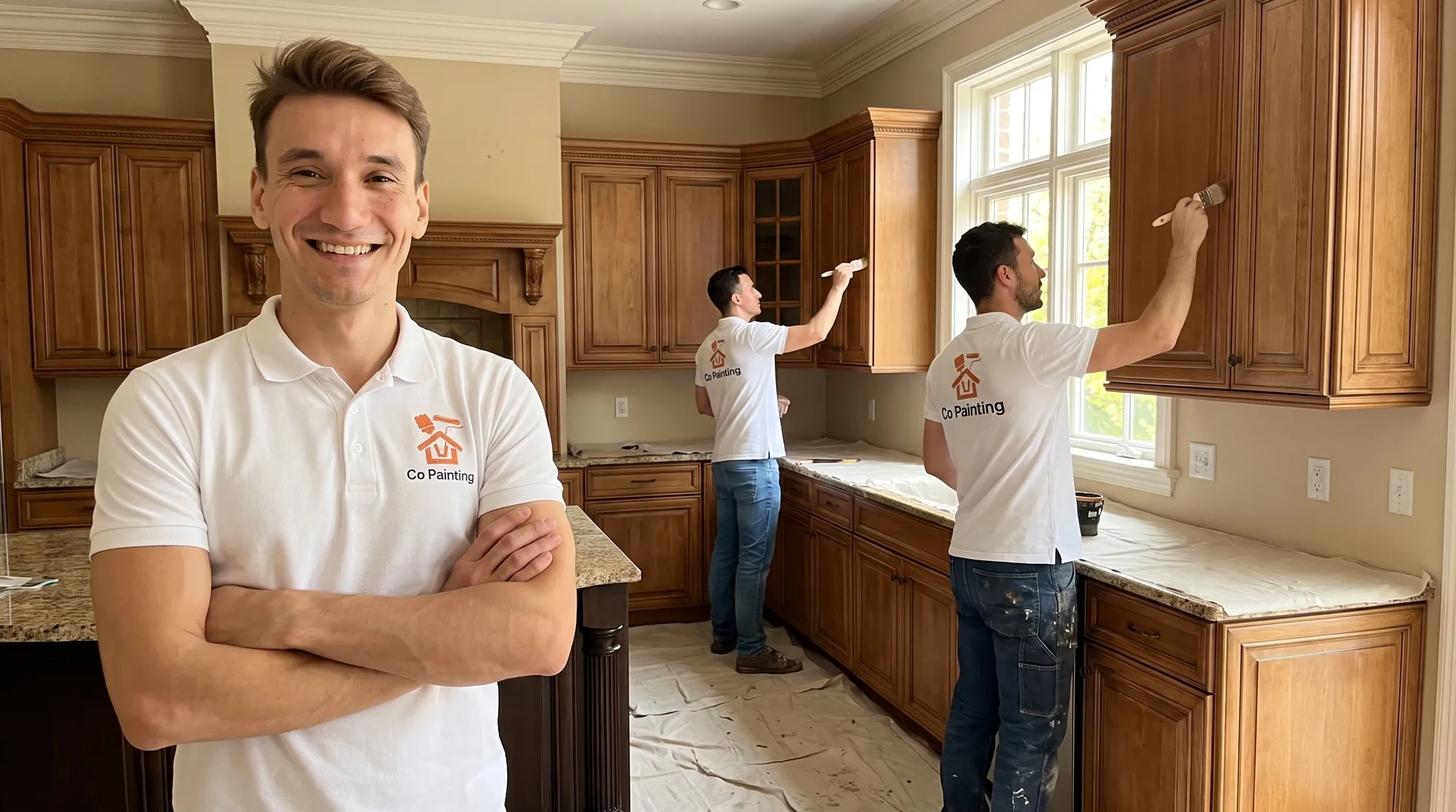
Need a Cabinet Painter in North York?
North York is an older part of the city, and a lot of its kitchens still have the cabinets they were built with. The 1950s and 60s boom filled Don Mills, Bathurst Manor, and the streets around them with bungalows and side-splits, and the bigger detached homes went up in York Mills and Bayview Village. Those kitchens came with solid oak and birch cabinetry built to last, and plenty of it is still on the wall under fifty or sixty years of oil finish and varnish. Paint sold in Canada today is capped at 90 mg/kg of lead under the federal Surface Coating Materials Regulations, but the coats already on a 1960s door were not, so we sand those wet and contained. The boxes are usually sound. It's the honey-oak colour and the dated grain that make the whole room feel stuck in another decade.
The change people ask for most is honey oak to a soft white, and it turns a tired kitchen into a bright one without moving a single box. The other half of the work is condos. The Yonge corridor through Willowdale and Newtonbrook and the towers around North York Centre and Sheppard are full of builder-grade galley kitchens, and painting the cabinets is the cheap, high-impact update before you sell, re-rent, or just stop looking at them. If your cabinets are sound but the colour is done, that's exactly what we fix. Give us a call.
What a Cabinet Job in North York Takes
Cabinets are not walls. They get touched, wiped, splashed, and slammed all day, and the finish has to take it. That's why most of a good cabinet job is prep, and it's the part a cheap quote skips to come in low.
Here's the one that matters most. Kitchen cabinets carry years of cooking grease and oil, right on the doors and the fronts near the stove where hands and steam hit hardest. Grease is the number one reason a cabinet finish fails. Paint will not bond to it. Skip the degrease and the whole thing peels at the door pull inside a month, no matter how good the paint was. So we degrease every surface first, wipe it down, and hit the stubborn buildup with TSP before anything else happens. It's invisible on the finished job, and it's the difference between a finish that lasts ten years and one that lets go by spring.
Then there's the finish itself. We spray the doors and drawer fronts instead of brushing them. A brush leaves marks and a roller leaves stipple, and on a big flat cabinet door you see every one of them in the light. Spraying lays the paint down in an even, smooth coat with no ridge to catch the light. The frames that stay bolted to the wall get brushed and rolled by hand where spraying isn't practical, and we mask the kitchen off so the overspray goes nowhere near your counters or your floor.
We're also straight with you about what paints well and what doesn't. Solid wood, MDF, birch, and previously painted cabinets take paint beautifully. Most laminate paints well too, as long as it gets the right bonding primer. Thermofoil is the one to watch. That thin vinyl skin resists paint and can already be peeling at the edges, and forcing paint onto a failing surface just buys you a callback. If your boxes are rotted, warped, or water-damaged, or the frames have gone loose, paint is the wrong call and we'll tell you so. Painting is for sound cabinets with a dated finish. We sort that out at the estimate, before you've paid for anything.
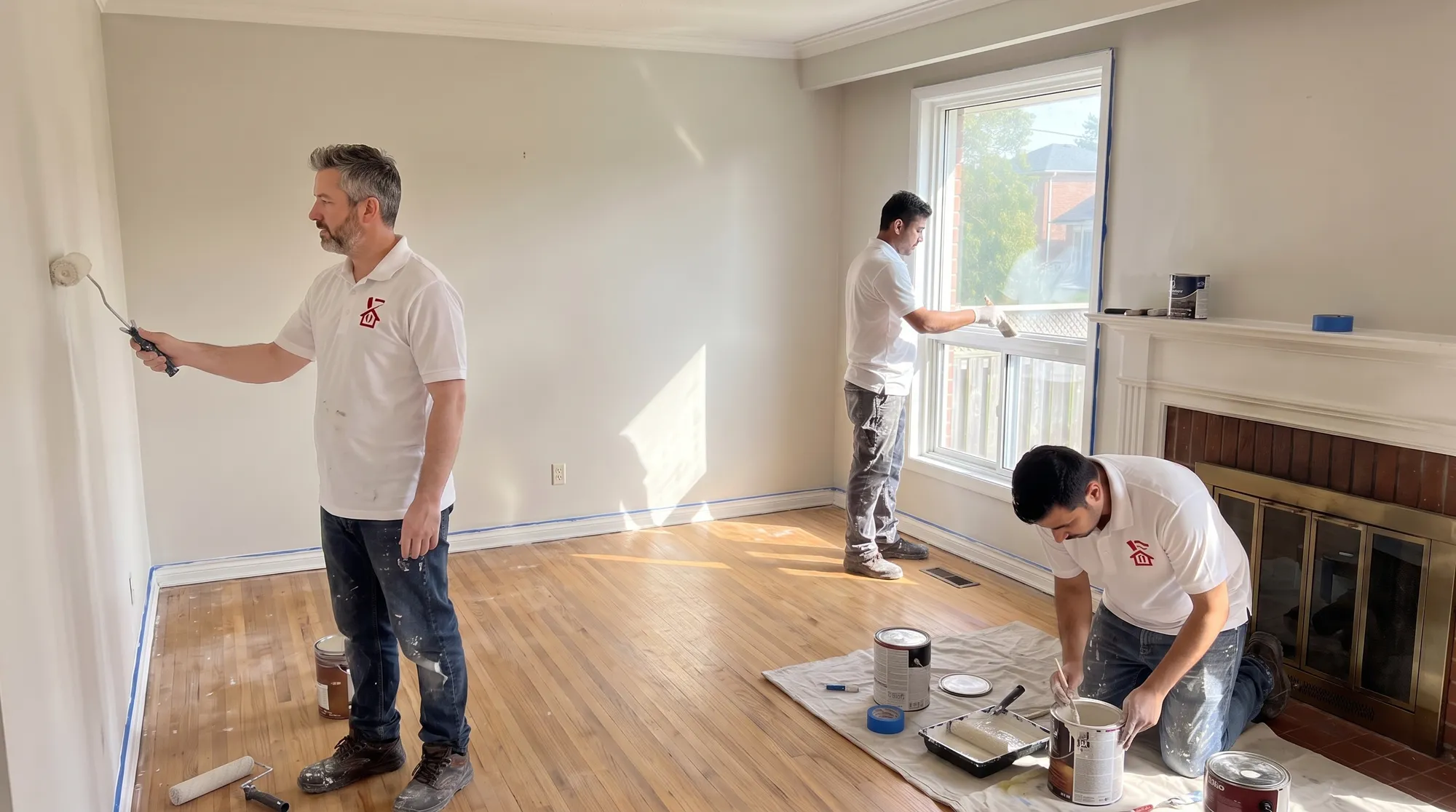
Our Cabinet Painting Process, Step by Step
Every kitchen is a little different, but the sequence doesn't change. This is what a proper cabinet job looks like, start to finish.
- Remove and label everything. Every door, drawer, shelf, and piece of hardware comes off, and each one gets numbered so it goes back exactly where it came from. We mark the number on the wood under the hinge too, so nothing gets guessed at on reassembly. Nothing gets painted on the wall.
- Degrease the whole kitchen. The step cheap quotes skip. We degrease every door, front, and frame, then wipe it clean, and break out the TSP on the heavy buildup by the stove. This is what makes the finish stick. Miss it and the rest of the work is wasted.
- Scuff-sand for grip. We sand the sheen off every surface so the primer has something to bite into, then tack off the dust. A glossy factory finish gives paint nothing to hold, so this step is not optional.
- Fill, and grain-fill the oak. Dents, dings, and old hardware holes get filled and sanded flat. On open-grain oak, which is common in North York's original cabinetry, we fill the grain first so the texture doesn't telegraph through the paint. A primer alone won't bury oak grain, and skipping this is why some painted oak still looks like oak.
- Bonding primer. We prime with a bonding primer built for cabinetry, so it grips slick and previously finished surfaces. On old accumulated oil, varnish, or tannin bleed, we seal it first with a shellac-based stain-blocker so nothing bleeds up through the colour. The primer's whole job is adhesion and stain block.
- Spray the topcoat in thin coats. This is where spray painting earns its keep. Thin, even coats sprayed on the doors and fronts, sanded lightly between coats, for a smooth surface with no brush marks. Two coats minimum, three for a dramatic light-over-dark change.
- A durable cabinet enamel. We finish in a hard, self-leveling cabinet enamel, the kind that dries to a furniture-like surface you can wipe clean. It's built to take daily use, not the flat wall paint some quotes cut corners with.
- Let it cure, not just dry. Cabinet enamel feels dry in hours but keeps hardening for a couple of weeks as it chemically cures. We don't rush the reassembly, and we tell you how to treat it while it finishes hardening.
- Reassemble and walk it with you. Hardware back on, doors and drawers rehung and adjusted so they sit straight and close clean. Then we walk the finished kitchen with you before we call it done.
The Cabinet Painting We Do in North York
Our Kitchen Cabinet Painting Services cover the whole range, from a straight colour update to a full two-tone redesign. Here's what people ask us for.
Full kitchen cabinet repaints
The whole kitchen in one project. Every door, drawer front, and frame taken off, prepped, sprayed, and rehung, done in an order that keeps the kitchen usable as much as possible while we work. One crew from start to finish, so the white on the uppers matches the white on the lowers and nothing looks patched in. This is the job that resets a North York kitchen.
Honey oak to white, and other colour changes
The most requested change in North York. Old honey oak goes to a soft white, a warm greige, or a deep modern colour, and the room reads twenty years newer. A big colour change like light over dark needs the right primer and an extra coat to cover clean, which is why we spray it. Any colour change starts with getting the base right so the new colour lands even.
Two-tone kitchens and islands
A white perimeter with a darker island, or contrasting uppers and lowers, is one of the easiest ways to make a plain kitchen look designed. We handle the whole two-tone layout in one job so the two colours are dialed in together instead of guessed at separately.
Spray-finished doors and drawer fronts
The doors are where a cabinet job lives or dies, so they get sprayed. Sprayed thin coats give an even, streak-free surface that looks manufactured, with none of the brush marks or roller stipple you'd see on a big flat door done by hand. It's the single most visible difference between a pro cabinet finish and a weekend one.
Colour help before you commit
Picking a cabinet colour off a tiny chip is how people end up unhappy. We put real samples on your actual doors, in your actual kitchen light, so you can see honey-oak-to-white or a two-tone before you commit the whole room to it. It's a small step that saves the expensive change of heart.
Paint Your Cabinets, or Replace Them?
If the boxes are solid, painting almost always wins. Replacing them means tearing everything out, which drags in demo, dust, and usually plumbing, electrical, and appliance work, with your kitchen gone for weeks. Paint leaves every box on the wall, so none of that happens.
The honest version is this. Painting is the least disruptive and least expensive way to transform a kitchen, and a quality painted finish lasts years before it shows real wear. It's the right call when your cabinets are structurally sound and just dated. Replacement is the right call when the boxes are failing: rotted, warped, water-damaged, or built so cheaply they're falling apart. We'll look at yours and tell you which one you're actually dealing with, even when the answer is that paint isn't worth it. We'd rather lose a job than sell you a finish over a problem paint can't fix.
Why choose us
Why North York Homeowners Choose Us for Cabinets
The degrease we never skip
Degreasing is the adhesion step, so we build the cleaning time into every cabinet job instead of trimming it to hit a lower number. Every surface gets degreased and wiped, TSP on the heavy buildup, before a drop of primer goes on. It's slow, hands-on work up front, and it's why our finishes stay stuck.
A sprayed finish, not a brushed one
We spray the doors and fronts for a smooth, even surface with no brush streak, and we brush and roll only the frames where spraying isn't practical. You don't get brush marks on the parts you look at every day. That finish is the whole point of hiring a pro instead of doing it yourself.
A hard finish backed for three years
We finish cabinets in a durable, self-leveling enamel that wipes clean and takes the daily knocks a kitchen hands out. The work is backed by our warranty of up to 12 years. If something we painted fails inside that window, we come back and make it right.
Fifteen years on the tools, and a record you can check
Our crews average fifteen years of painting, and we hold a 5.0 rating across 70 Google reviews. We're fully insured and licensed in Ontario, and we can hand you the paperwork before we lift a brush.
Nine Things Worth Knowing Before You Paint Your Cabinets
- The degrease decides everything. Kitchen cabinets are coated in cooking grease you can't always see. If it isn't cleaned off first, the finish peels at the door pull no matter what's in the can.
- Prep is most of the job. Roughly seventy percent of a real cabinet job is prep. The spraying is fast. The cleaning, sanding, filling, and priming are where the durability comes from.
- Spray beats brush on doors. Brush and roller both telegraph on a flat door. Spray doesn't.
- Oak grain has to be filled. Open-grain oak telegraphs through paint unless the grain is filled first. Primer alone won't bury it.
- Most laminate can be painted. With the right bonding primer, laminate and melamine take paint and hold for years. It's less foolproof than wood, so it needs the correct system.
- Thermofoil is the risky one. That vinyl skin resists paint and may already be peeling. Sometimes it's better replaced than painted, and a good painter tells you that up front.
- Cure is not the same as dry. Cabinet enamel feels dry in hours but keeps hardening for a couple of weeks. Go easy on the doors in that window.
- Sound boxes are the whole test. Painting is for cabinets that are structurally fine and just dated. Rotted or warped boxes should be replaced, not painted.
- A painted kitchen lasts. Done right, a painted cabinet finish holds up for years of daily use before it needs attention. Done cheap, it fails in months. The prep is the difference.
FAQ
Cabinet Painting Questions, Answered
Can you paint laminate or thermofoil cabinets?
Laminate, yes, in most cases. It needs the right bonding primer to grip the slick surface, and with that it takes paint and holds for years. Thermofoil is trickier. That thin vinyl skin resists paint and is often already peeling, and forcing paint onto it can fail. We look at yours at the estimate and tell you honestly whether paint is the right call or whether you're better off replacing those doors.
How long does cabinet painting take?
A typical kitchen runs a few days, not a few weeks. There's a day for removal and prep, time for priming and the sprayed coats to go on properly, and a final day to reassemble and walk it with you. We give you a real timeline with the written estimate, not a guess.
Do we have to move out while you paint?
No. You stay in the house. The kitchen isn't fully functional while the work is on, so it helps to plan meals around it, but we mask off the space, keep the dust contained, and clean up as we go. Most people carry on around it just fine.
Will the paint peel or chip?
Not when the prep is done right. Peeling almost always comes from paint applied over grease or a glossy surface that wasn't cleaned and sanded first. We degrease, scuff-sand, and use a bonding primer, then finish in a hard cabinet enamel. That's what keeps it stuck. It's also why we back the work for three years.
Do you spray or brush the cabinets?
We spray the doors and drawer fronts. On a cabinet door, brush always shows. A door is a big flat panel, and in raking light every brush ridge throws a thin shadow, so the strokes read from across the room. Spray lays down flat, with no ridge to catch that light. The one exception is the frames bolted to the wall, where spraying in place isn't practical, so those get done by hand.
What colours can we go with?
Anything you like. Honey oak to soft white is what we get asked for most, but we do warm greiges, deep modern colours, and two-tone layouts with a contrasting island. We'll put real samples on your own doors in your own kitchen light so you can see a colour change before you commit to it.
Is painting really cheaper than replacing the cabinets?
Yes, by a wide margin, as long as the boxes are sound. Painting leaves every cabinet where it is, so there's no demo and no plumbing, electrical, or appliance rework. You're paying for prep and paint, not demolition, new boxes, and a week of trades in and out of your kitchen.
How long before we can use the kitchen normally?
You can be back in the kitchen for light use quickly, but cabinet enamel keeps curing to full hardness over a couple of weeks. Be gentle with the doors and drawers in that window and don't scrub them, and the finish ends up hard and washable. We walk you through it at handover.
Are you insured?
Yes. Co Painting is fully insured and licensed in Ontario, and we can show you the paperwork before we start. We're also rated 5.0 across 70 Google reviews, and our work carries a warranty of up to 12 years.