
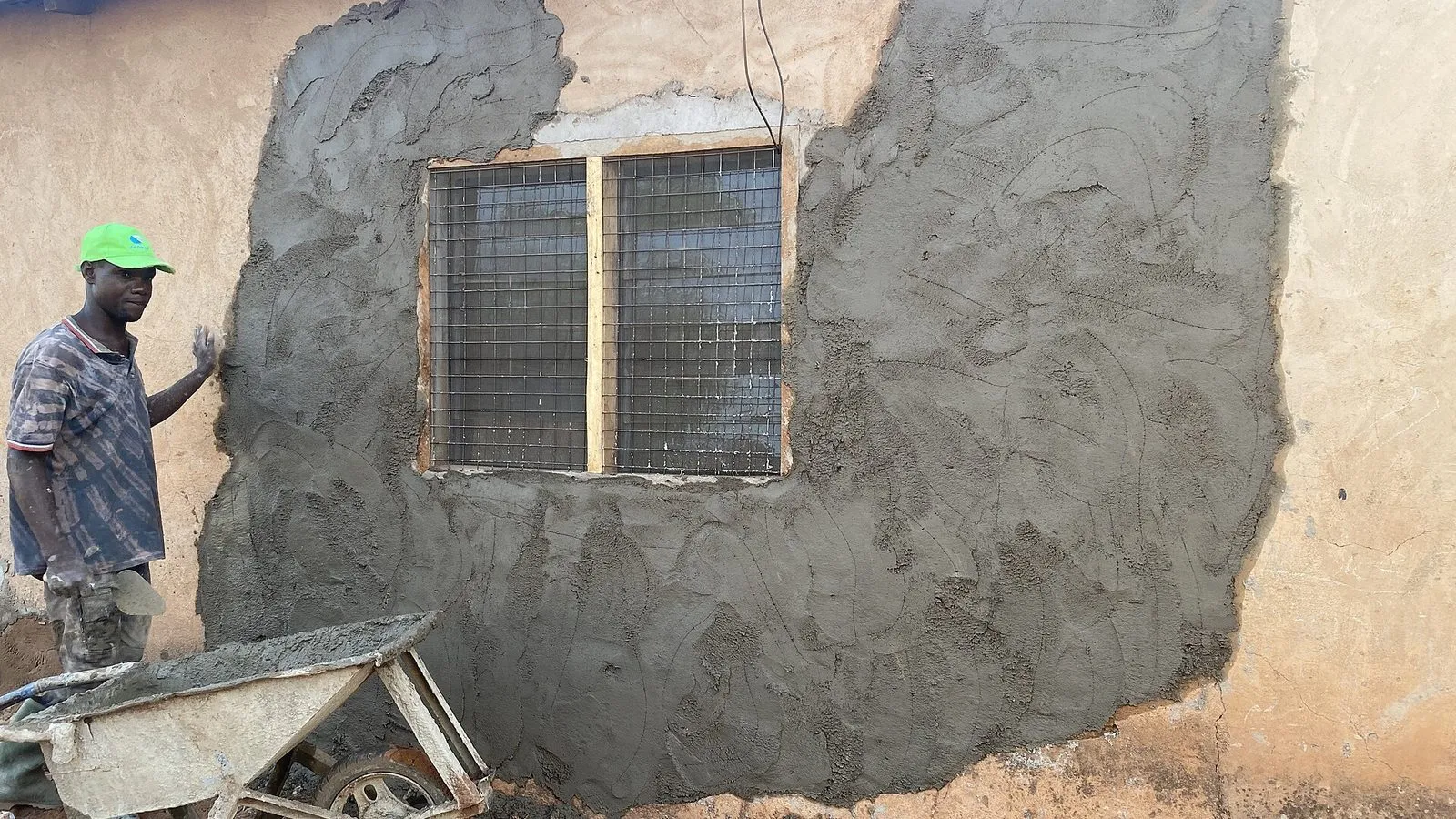
Need Plaster Repair in North York?
North York filled in fast, and the walls tell you when. The old township counted 85,897 people in 1951, 269,959 by 1961 and just over 504,000 by 1971. Plaster was the wall surface chosen for nearly every building until the 1930s and 40s, and plasterers were still working through the first years of that boom. On the older streets there is no board behind your paint, just a hard, brittle surface that fails from behind.
Two systems turn up here. Older houses have wood lath, thin strips nailed across the studs with gaps between them. Wet plaster was pushed through those gaps so it slumped over the back and hardened into keys, and those keys are all that hold the wall up. Postwar houses are usually rock lath, half-inch gypsum panels with crystals in the face paper. That difference decides the repair. Wood lath plaster loses its keys, so a section goes hollow and bows out while the painted face still looks fine. Rock lath fails along the seams.
Then there is the weather. Wood lath takes moisture out of the air and moves with it, so horizontal cracks reopen along the same line year after year, and stress cracks run diagonally out of a door or window frame. A winter of forced-air heat pulls every one of them apart again. Homes in Bathurst Manor went up between 1954 and the early 1960s, and the first Don Mills houses were started in May 1953. The oldest builds of that era commonly carry plaster and lath, the later ones early drywall. We find out which by tapping, not by the address.
What Plaster Repair Actually Takes
The first tool out of the bag is a knuckle. Sound plaster answers back hard and tight. A drummy note means the keys behind that area have broken. That matters most on a ceiling, because when one key goes its load shifts onto the keys either side and the failure spreads.
Loose plaster still in one piece gets drawn back to the lath with flathead screws and plaster washers, perforated discs that spread the pressure so the head does not punch through. The washers are taped, skimmed and gone. Where the face has to stay untouched, the other route is acrylic adhesive injected through drilled holes, braced until it sets.
Cracks are sorted by behaviour, not by width. A hairline over sound plaster is cosmetic. A crack that reopens every season gets widened first so the compound has a shoulder to grip, then bridged with fiberglass mesh tape bedded in a setting compound. Setting compound hardens by chemical reaction instead of drying out, in 60, 90 or 120 minute versions, and shrinks far less than all-purpose mud. It is hard to sand, so it beds the tape while the last coat goes on in all-purpose. A wide structural crack gets cut back about six inches each side to the lath.
Sometimes the white finish coat lets go of the brown coat while the base is still solid. More mud on top buys a few months. The loose finish comes off, a liquid bonding agent goes onto the exposed base coat, and the new finish goes over that.
Old layers change how we work. Lead in paint was first regulated in Canada in 1976, and before 1960 the levels ran as high as 30 to 50 per cent, heaviest on trim and door edges. Assume anything built before 1980 has it, which rules out dry sanding and heat guns, the two methods Ontario names first when it explains how to control a lead hazard. Asbestos is the one nobody expects inside a wall. Most structures built between 1930 and 1975 hold asbestos products somewhere, and the residential list includes drywall joint-filling compound and sometimes the plaster itself. Ontario Regulation 278/05 treats a small wetted hand-tool repair as its lowest-risk category. Past that it is certified abatement work, not a painter's job.
Skim coats go on thin and in passes. One heavy coat shrinks and cracks as it dries, the exact defect it was supposed to hide. Each pass gets a light sand or a wipe with a damp sponge, and the target is one flat plane rather than a map of patched islands. That shows up most under strong sidelighting, because light hitting a wall at a shallow angle exaggerates every ridge. Fresh plaster then wants two to three weeks of cure, an alkaline-resistant primer, and a stain blocker over old water marks. New board and finishing work sits on our dry wall contractor page for North York.
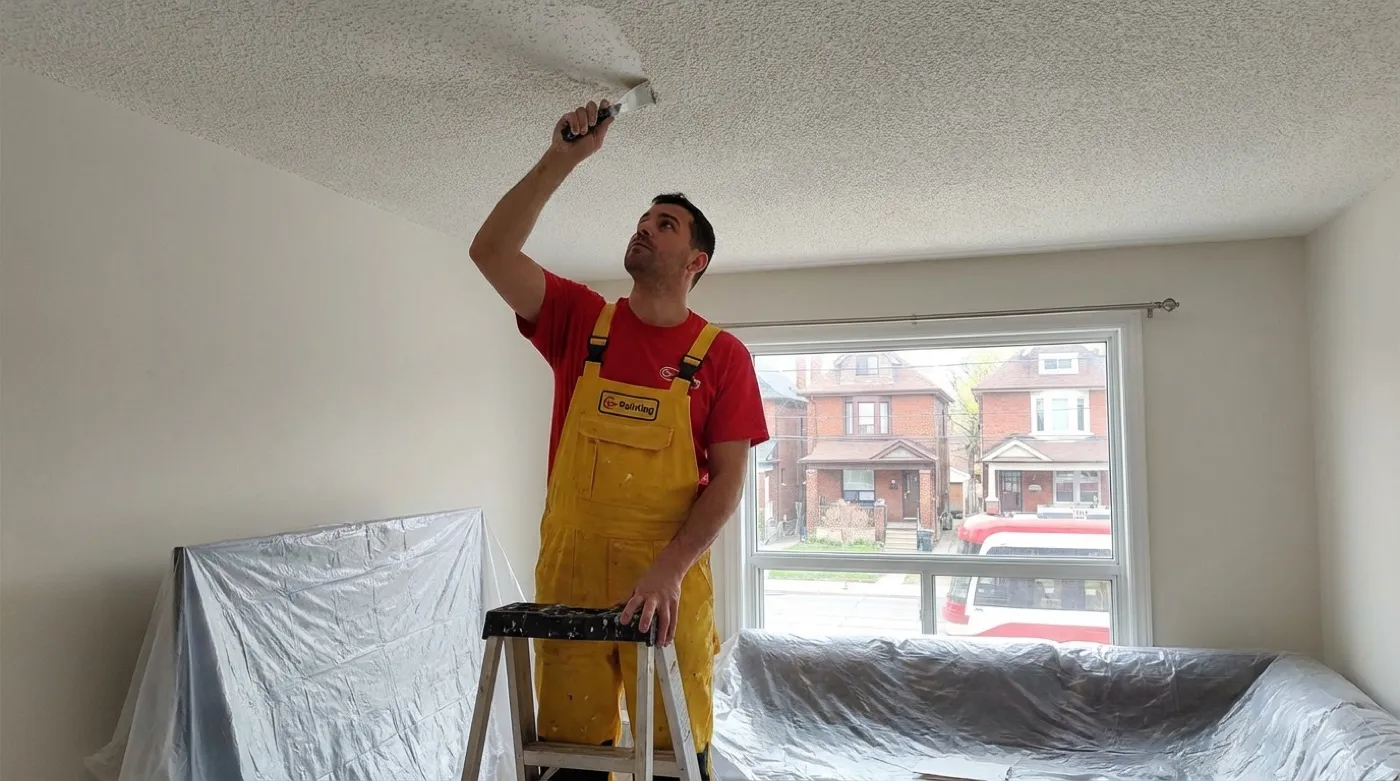
Plaster Repair Services in North York
Crack cutting, taping and filling
Moving cracks get opened, not just filled. We widen the line, bed mesh tape in setting compound and feather two coats either side. Seasonal cracks over doors and the horizontal lines from lath movement both get it.
Skim coating walls and rooms
A thin, continuous coat over the whole surface, not a patch. It fills old repairs, kills the texture left by decades of touch-ups and leaves one flat plane.
Hollow and bulging plaster re-anchored
Where the keys have broken, the plaster gets pulled back to the lath with screws and plaster washers, or held with injected adhesive where the face has to stay clean.
Plaster patch and rebuild
Holes under about four inches get built back in two applications, because one heavy coat dries concave and shows the moment the wall is painted. Larger openings get metal lath to key into. Plastering is layered work, so a patch gets built back in stages rather than in one heavy pass.
Plaster ceiling repair
A ceiling carries its own weight on those keys, so a sag is a different problem from a wall crack. Loose sections get re-secured, holes get lathed and filled in layers, and the paint goes on flat so light scatters instead of picking out the waves.
Water-damaged plaster and stain block
The leak stops and the plaster dries before anything else. Then we cut back whatever went soft, rebuild it, and seal the tide marks so they do not bleed through a light colour.
Prime and paint after repair
A repair is only invisible once it is painted right. New plaster gets its cure time and the right primer, patches get spot primed, and the colour goes on in low-VOC, low-odour paint.
Why choose us
Why North York Homeowners Choose Us
We sound the wall before we price it
Tapping tells us how much of the wall is actually loose, and that is what moves a plaster quote. You hear about the hollow sections before the work starts, not on day three.
Pre-1960 prep, done wet
Paint made before 1960 ran as high as 30 to 50 per cent lead, heaviest on trim and door casings. We seal the room, prep wet, vacuum with HEPA and prime instead of sanding. Low-VOC, low-odour paint after.
One crew from crack to colour
The same people who cut and tape the cracks prime and roll the wall, so there is no handoff and no flash line where a repair was left unprimed. We are licensed and insured in Ontario.
Fifteen years on the tools, backed for three
Our crews average fifteen years of painting and plaster work, rated 5.0 across 70 Google reviews, with a three-year warranty. If a crack we taped comes back in that window, so do we.
What Changes the Price of Plaster Repair
Square footage is the wrong starting point on plaster. Two rooms the same size can be a day apart depending on how much of the wall is hollow, how many cracks still move, and whether the finish coat is still bonded to the base.
Four things move it most. How much re-anchoring the surface needs. Patch or full skim. Ceilings against walls, because ceiling work is slower. And the number of visits, since a skimmed room still needs its dry cycles and a sanding pass.
Age adds a step. On a pre-1980 house the prep is wet and contained, which takes longer than a quick sand. If testing finds asbestos beyond a small patch, that goes to a certified abatement contractor, not onto our invoice. You get the number in writing before anything starts.
Nine Things Worth Knowing Before Plaster Repair
- Plaster is not drywall. It is harder, thicker and more brittle, and it fails from behind.
- Tap before you trust the surface. A hollow note means broken keys, and filling a crack on the face of a loose section is wasted work.
- Tape the cracks that move. One that reopened last winter reopens next winter unless mesh tape and a setting compound bridge it.
- Widen the crack before you fill it. Compound needs a shoulder to grip, or it sits on top and pops off.
- Thin coats, more of them. One heavy skim shrinks and cracks as it dries, the same defect you were trying to hide.
- Give it real dry time. Fresh plaster wants two to three weeks and an alkaline-resistant primer.
- Never dry sand a pre-1980 wall. Lead dust and asbestos-bearing joint compound hang in the air for a day and settle everywhere.
- Block water stains first. Tide marks bleed straight through a light colour, so the blocker goes on before the finish.
- Watch the light. Sidelighting and gloss paint both exaggerate every ridge, while flat paint on an older ceiling hides the waves.
FAQ
Plaster Repair Questions, Answered
Why do the same plaster cracks come back every winter?
Because they are moving, not just open. Wood lath swells and shrinks with the humidity, and forced-air heat pulls the same lines apart every winter. Filler has nothing to hold onto. The crack gets widened, mesh taped and bedded in setting compound.
How can you tell if plaster is loose and not just cracked?
We tap it. Sound plaster gives a hard, tight note. Hollow or drummy means the keys behind it have broken and that section is only held by the plaster around it. On a ceiling it shows as a shallow sag first.
How do I know whether I have plaster or drywall?
Push a pin into a hidden spot. Drywall takes it easily and plaster will not let it in. Plaster is also thicker, about half an inch over rock lath and three quarters to seven eighths over wood lath.
Do you skim coat whole rooms, or only the patched spots?
Both, and it depends how patched the wall already is. Spot skimming works when the rest of the plane is flat. Once a wall carries repairs from several different hands, a full skim over the whole surface is the cheaper fix.
My house is from the 1950s. Is lead paint a problem?
Assume yes, and it is manageable. Lead in paint was first regulated in Canada in 1976, and before 1960 the levels ran as high as 30 to 50 per cent. It is only a hazard once someone releases it, so we never dry sand or heat strip.
Could there be asbestos in old plaster or joint compound?
Possible in an older house. Asbestos turns up in drywall joint-filling compound and sometimes in plaster itself in buildings from roughly 1930 to 1975. Ontario Regulation 278/05 treats a small wetted hand-tool repair as lowest risk and anything larger as certified abatement work.
How long does plaster repair take, and can we stay in the house?
Most people stay. A few cracks and a couple of patches is often one visit plus a short return for sanding and paint. A full room skim runs over several visits, one per dry cycle.
My plaster ceiling is sagging in one corner. Can it be saved?
Usually, if the plaster around it is still sound. A sag means the keys in that area let go. We re-secure the section to the lath with screws and plaster washers, then skim over the fixings. Crumbling plaster or rotten lath comes out instead.
How do I get a price, and do you paint afterwards?
Call or fill out the form and we book a free estimate. We sound the walls, read the cracks and put the number in writing first, because wall condition drives a plaster quote more than square footage does. Painting is part of the same job when you want it.