
Need a Door Painter in North York?
Doors are the most touched surface in a house and the last thing anybody budgets for. In North York that shows up two ways. On the older side of the area, doors are solid wood with decades of coats on them. In Bathurst Manor 36% of the homes predate 1960 and in Parkwoods-Donalda it is 29%, according to the City of Toronto neighbourhood profiles. Those doors are worth saving. They are heavier and better made than anything at a big-box store. They just need the old finish knocked back and a proper enamel put on.
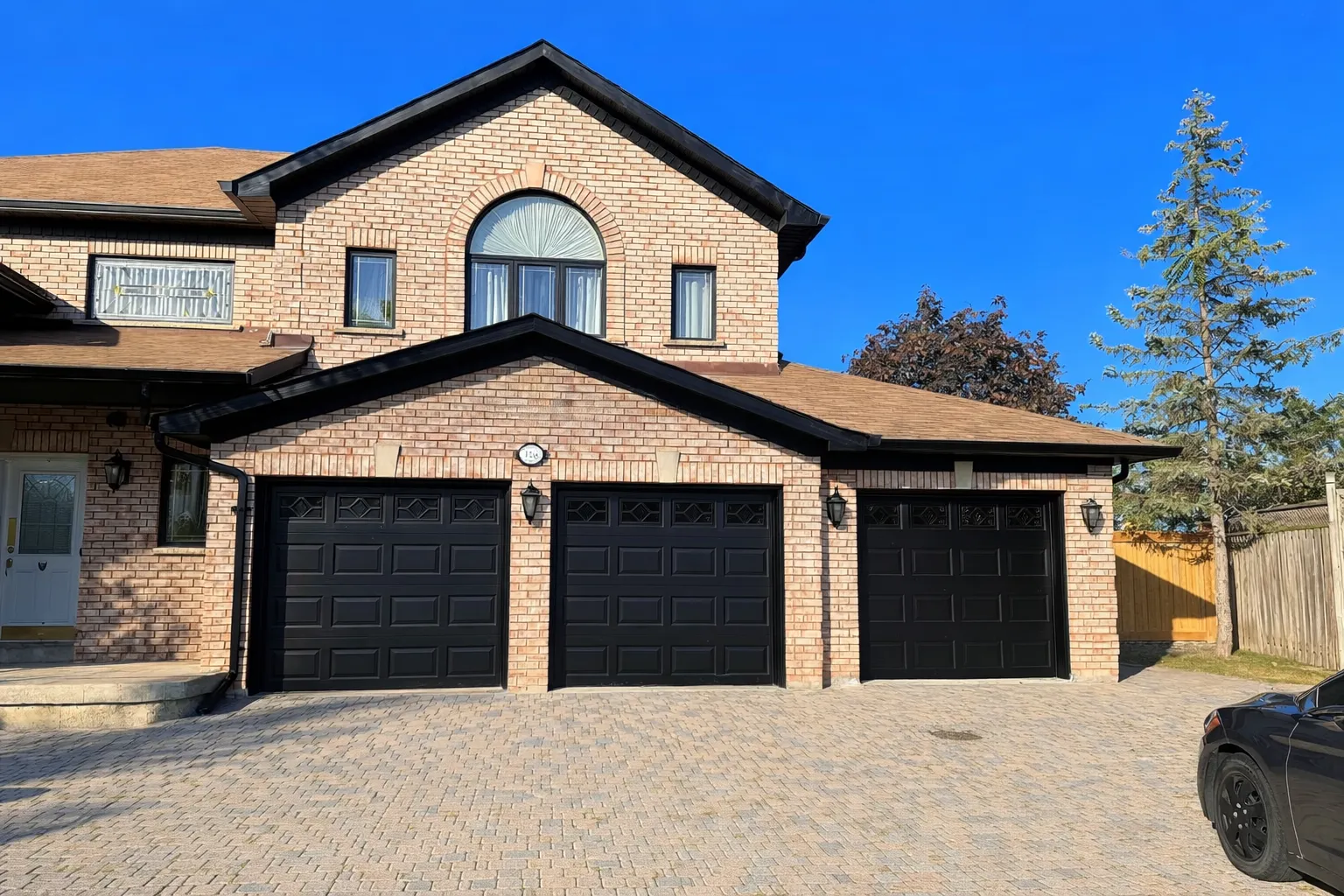
Then there are the garages. When Don Mills was laid out in the 1950s, the City of Toronto's own exhibit on North York describes the new modernist houses as having low, sweeping roof lines with integrated garages or car ports. Attached garage doors have been part of the look here from the beginning, and they are the biggest painted panel on most of these houses. A faded double door drags down an otherwise sharp exterior, and it is a one-day fix.
What Door Painting Actually Takes
A door gets grabbed, kicked, slammed and rained on. So the finish has to be harder than a wall finish, and it has to go on in a way that does not glue the door shut. Almost every bad door job breaks one of those two rules.
Prep first. Glossy old paint is the number one reason a new coat peels off a door, and the manufacturer is blunt about it. The Benjamin Moore Advance data sheet says to sand glossy alkyds before applying, and that abrasion by sanding is what leads to optimum adhesion on hard glossy surfaces. So we dull everything, fill the dents, and pull the hardware off instead of taping around it. Taped hinges and handles are how you end up with paint ridges that stop the door closing properly. On a pre-1980 house we also treat the old layers as lead-bearing, because Canada's first cap on lead in interior consumer paint was the 1976 Liquid Coating Materials Regulations and it still allowed 5,000 mg per kg. That means containment and wet prep, not a belt sander in your hallway.
Then the product. For interior doors we use a waterborne alkyd enamel that flows out like old oil paint but cleans up with water. Its numbers are on the sheet: dry to touch in four to six hours, sixteen hours before a second coat, and up to 30 days to reach full hardness and final sheen. It is block resistant, which is the property that stops a closed door sticking to its own frame, and it is rated for minimal yellowing, which matters on a white door. When somebody needs the doors back in service the same day, we switch to a fast-dry door and trim acrylic that Sherwin-Williams states dries to the touch in as little as one hour and lets a door be closed without marring or sticking the same day it is painted.
Exterior doors carry one extra rule that catches almost everybody. Therma-Tru, one of the big fibreglass and steel door makers, requires that all six sides of a door be finished, and only lets you skip the sixth if a genuine factory bottom sweep is already fitted. Unfinished edges are where water gets in. Their warranty also gives new doors a clock, finishing within the lesser of two weeks from installation or two weeks from exposure to weather, and it warns that simulated divided lite bars should not be painted dark colours where they get direct sun. We work to those rules. If you want to see everything else we cover, start at our North York painting company page.
The Door Painting We Do in North York
Front and entry doors
The highest-value square metre of paint on the house. We take the door down where we can, or mask the opening and finish it in place, then spray or brush a hard enamel that takes handprints and weather. Hardware comes off, the edges get done, and the weatherstrip gets protected.
Interior doors, all of them
Bedroom, bathroom, basement and hallway doors, done as a set so the whites match. Hollow-core doors from the 60s and 70s take enamel well once the old sheen is sanded off. We fill the dings, spot-prime the bare patches, and finish in a block-resistant enamel so the door does not stick the first humid week.
Garage doors
The biggest painted panel on a North York house and usually the most sun-beaten. Steel and aluminum doors get washed, de-chalked and dulled, then finished in an exterior coating rated for metal. The paint maker's prep spec is explicit that the surface must be free of chalk and loose paint, or the new coat is bonding to powder.
Door frames, casings and jambs
A fresh door against a yellowed frame looks worse than leaving both alone. We do the casing, jamb, stop and header with the door, caulk the joints that have opened up, and cut a clean line at the wall. The caulk is paintable and has its own limits, above 40 F and nothing when rain or frost is coming inside 24 hours. Doorway painting is that whole opening, frame and all, not just the slab that swings.
Steel and fibreglass doors
These need different handling from wood. Shiny factory surfaces get dulled so the coating can grip, and bare or damaged spots get a metal primer first. Painting over a manufacturer's factory-applied exterior coating is generally excluded from the door warranty, so we tell you that before we start.
Closet, bifold and French doors
The fiddly ones. Louvred closet doors have twice the surface area they look like, and French doors are mostly edges and glass. These get sprayed in a masked-off room, because brushing a louvre leaves runs no matter how careful you are.
Condo and apartment unit doors
Unit doors, closet doors and the inside face of the entry door in buildings across Willowdale, Bayview Village and Henry Farm. We work to the building's rules on elevators, parking and quiet hours, and we use low-odour product.
Why choose us
Why North York Homeowners Choose Us
Six sides, not just the one you see
Door manufacturers require every side of an exterior door to be finished, top and bottom edges included, and the only exception is when a factory bottom sweep is already fitted. Skipping the edges is how water gets into a slab. We finish what you cannot see because that is where doors fail.
You can close the door the same day
When a door has to be back in service fast we use a fast-dry door and trim acrylic that the maker states is dry to the touch in as little as one hour, and that lets the door be closed without marring or sticking the same day it is painted. No sleeping with an open front door.
We sand before we finish, every time
The enamel data sheet says to sand glossy alkyd first, and that sanding is what gets optimum adhesion on hard glossy surfaces. Old doors in this part of the city are almost always glossy alkyd underneath. Dulling that layer takes time and it is the only reason the new finish stays on.
Fifteen years on the tools, backed for three
Our crews average fifteen years of painting, most of it on Toronto houses, and we are rated 5.0 across 70 Google reviews. Every job carries a three-year workmanship warranty, so if a door we painted fails in that window we come back and fix it.
Nine Things Worth Knowing Before You Paint a Door
- Pull the hardware, do not tape it. Hinges, handles, strikes and numbers all come off. Paint built up around taped hardware is what makes a door bind in the frame afterwards.
- Sand the gloss or nothing sticks. The enamel maker's own instruction is to sand glossy alkyd before applying, because abrasion is what gives optimum adhesion. Skip it and the finish peels in sheets.
- Use enamel, not wall paint. A door needs a block-resistant finish, which is the property that stops the closed door bonding to its own frame on a humid night. Flat wall paint on a door looks tired in a month.
- Finish all six sides of an exterior door. That is a manufacturer requirement, not a preference. The top and bottom edges are the ones people skip, and they are the ones water finds.
- Go careful with dark on a sunny door. Door makers advise against painting plastic lite frames and simulated divided lite bars dark colours where they get direct sunlight. Dark absorbs heat and heat moves plastic.
- A new door has a clock on it. One major maker requires finishing within the lesser of two weeks from installation or two weeks from exposure to weather, and warns that late finishing raises the risk of damage the warranty will not cover.
- Feels hard is not the same as is hard. The enamel we use can take up to 30 days to reach full hardness and final sheen, and the sheet asks for three to five days before heavy abrasion. Do not lean furniture on a fresh door.
- Sixteen hours between coats, not two. Waterborne alkyd is dry to the touch in four to six hours but wants a full sixteen before a recoat. Rushing that is why some door jobs stay soft and mark.
- Watch the temperature. The interior enamel wants a surface at 50 F or warmer. The exterior products we use will not go on below 35 F. A cold steel garage door in October is colder than the air around it.
FAQ
Door Painting Questions, Answered
How long does it take to paint the doors in a house?
A front door on its own is usually a day. A full set of interior doors in a typical North York house is often two days, because the enamel wants sixteen hours between coats. We give you the real schedule with the written estimate.
Can I close the door the same day you paint it?
With the fast-dry door and trim product we carry, yes. The maker states it dries to the touch in as little as one hour and that the door can be closed without marring or sticking the same day it is painted. On the slower waterborne alkyd we leave doors open longer.
Do you take the doors off the hinges?
Where it makes sense, yes. Off the hinges means we can finish the top and bottom edges and spray a flat surface with no runs. If a door has to stay hung for security, we mask the opening and finish it in place.
Can you paint a steel or fibreglass front door?
Yes. They need different prep from wood. Shiny factory surfaces get dulled so the coating can grip, and any bare or rusted spots get a metal primer first.
Will painting my front door void the door warranty?
It can, and you should know that up front. Manufacturers generally exclude any painting or alteration of their factory-applied exterior coating from the warranty. Check your own door paperwork, and we will tell you what we see on site.
Can I paint my front door black?
Usually yes on a solid slab. Be careful where the door has plastic lite frames or simulated divided lite bars in direct sun, because door makers advise against dark colours there. Dark absorbs heat and heat distorts plastic.
Do you spray or brush?
Whichever gives the better finish for that door. Louvred and panelled doors get sprayed. Simple slabs brush and roll out fine.
Can you paint the garage doors too?
Yes, and it is one of the best-value jobs on a North York house. Steel and aluminum doors get washed, de-chalked and dulled first, because otherwise the new paint is stuck to dust.
My doors are from the 1960s with a dozen coats on them. Can they be saved?
Almost always, and they are worth saving. Solid doors from that era are better built than most new ones. We knock the built-up gloss back, fill the dents, and treat the old layers as lead-bearing, because Canada did not cap lead in interior paint until 1976.
How do I get a price?
Call or fill out the form and we book a free estimate. We count the doors and give you the number in writing before anything starts.