
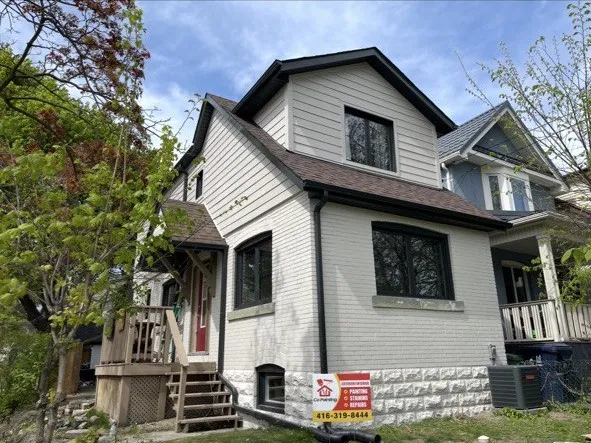
Need a Siding Painter in North York?
The siding on a North York house has usually been up there a very long time. In Don Valley Village, 69% of the homes were built between 1961 and 1980. Parkwoods-Donalda is 55% from that same window, and Henry Farm is 38%, according to the City of Toronto neighbourhood profiles. Whatever is on those walls has taken fifty years of Toronto sun, freeze and road salt. Faded, chalky, and two shades off the colour it started as.
Painting siding is the cheapest way to change a whole house, and it is also the exterior job with the most ways to go wrong. Vinyl, aluminum, wood, hardboard and fibre cement each want different handling, and one of them will physically deform if you pick the wrong colour.
What Siding Painting Actually Takes
Two things decide whether a siding job lasts. What comes off the wall before you start, and whether the colour is safe for the material.
Start with the wash. The exterior paint data sheet we work from is blunt: surfaces must be clean, dry and free of oil, grease, wax, rust, mildew, chalk and loose or scaling paint. Chalk is the one people miss. Old siding sheds a fine powder, and paint laid over it bonds to the powder instead of the wall. The same sheet also calls out the areas nobody hoses down, the eaves, overhangs, porch ceilings and protected wall areas, and says those should be washed with an appropriate cleaner and rinsed with a strong stream of water, because that is exactly where the contaminants that kill adhesion sit.
Then colour, and on vinyl this is not a style question. That data sheet says do not paint vinyl any colour darker than the original, or any colour with a Light Reflectance Value under 55, unless it is in the manufacturer's approved palette for vinyl and it also complies with your siding maker's own guidance. Its reason is plain: otherwise the colour absorbs more heat and can warp the siding, which means extra repairs and extra cost. Sherwin-Williams describes the same failure. Dark paint absorbs the sun's heat and transfers it to the substrate, and once vinyl expands that far it cannot contract back to its original dimensions. Their vinyl-safe range exists for this, a set of 100 colours including a limited selection of darker shades formulated to resist warping or buckling. So we check your colour first and tell you if it is off the table.
The rest is material by material. On vinyl a primer usually is not needed, and only pitted and porous areas get primed. On aluminum, new metal gets degreased and shiny surfaces get dulled with very fine sandpaper or a synthetic steel wool pad so the coating can grip. Bare substrates take two coats. The product goes on between 35 F and 100 F and is not to be applied when air or surface temperatures are below 35 F, which is the real limit on how late in the fall we can book you. It is dry to touch in an hour, recoatable in four, and should not be washed for two weeks. It also tests at 31 perms and passes ASTM D522 for flexibility with no cracking, which is what you want on a material that expands all summer. For everything else we cover, start at our North York painting company page.
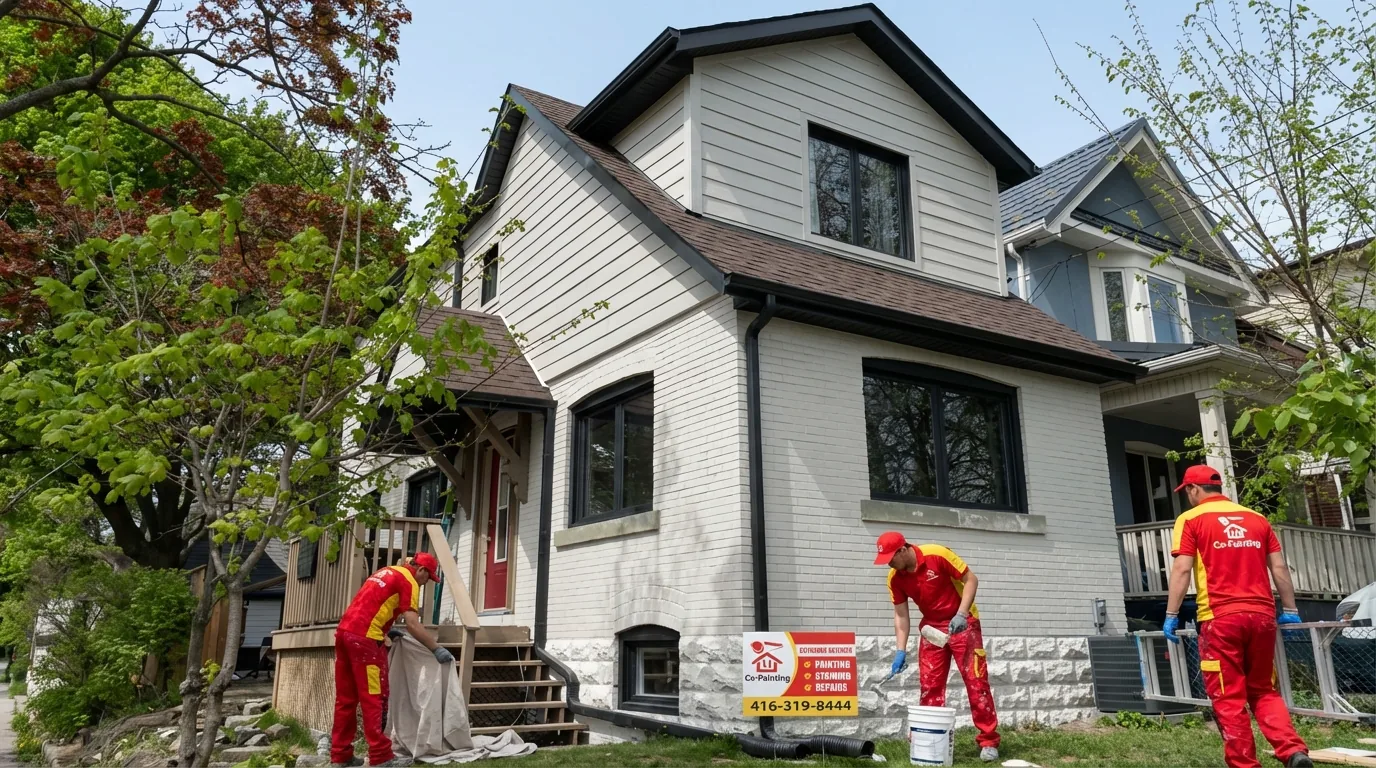
The Siding Work We Do in North York
Vinyl siding
Faded vinyl takes paint well and looks like new siding for a fraction of replacement. The job hinges on colour choice and a proper wash. We rinse the chalk and mildew off, prime only the pitted or porous spots, and keep the colour inside a vinyl-safe range.
Aluminum siding
Old aluminum is usually chalking badly, which is oxidised finish coming off as powder. It has to be washed off completely, because it is the surface a new coat would stick to. Shiny or new metal gets degreased and dulled with a fine abrasive first.
Wood, cedar and hardboard siding
Wood siding is the most forgiving to paint and the least forgiving if you skip prep. Loose and scaling paint gets removed and feathered smooth, bare wood gets primed, and bleeding species like cedar get a stain-blocking primer so tannin does not come through the finish. On a pre-1980 house we treat the old layers as lead-bearing. Canada's 1976 regulation capped lead in interior paint only, and exterior consumer paint was not brought to 600 mg per kg until the 2005 Surface Coating Materials Regulations.
Fibre cement and hardboard panel
Fibre cement is listed as a suitable substrate for the exterior product we use and holds paint well once clean. The failure point is the joints and cut ends, so those get sealed and the caulk lines renewed before the finish.
Soffits, fascia, eaves and porch ceilings
The parts of the house that never get rained on, which sounds like an advantage and is not. Un-weathered surfaces collect contaminants that stop paint sticking, and the manufacturer specifically calls for eaves, overhangs, porch ceilings and protected walls to be washed and rinsed hard.
Corner posts, trim and window surrounds
The bits that frame the siding and make or break the finished look. Corner posts, J-channel, window and door surrounds, and the caulk joints between them. The caulk we use adheres to wood, aluminum, vinyl, most plastics and fibre cement, goes on above 40 F, and gets skipped if rain or frost is forecast inside 24 hours.
Picking a colour your siding can carry
We start from what the material allows, then work on what you want. On vinyl that means a Light Reflectance Value of 55 or higher, or a colour from an approved vinyl palette. On wood and fibre cement you can go as dark as you like.
Why choose us
Why North York Homeowners Choose Us
We check the colour against the siding first
Nobody wants to hear their favourite charcoal is a bad idea on vinyl, but the paint maker's sheet says no colour darker than the original and nothing under 55 LRV outside an approved palette. We tell you at the quote, not after.
The chalk comes off before anything goes on
The prep spec says clean, dry and free of chalk, mildew and loose paint. Old aluminum and vinyl both shed powder. Painting over it means the new coat is bonded to dust, and that is the job that peels in year two while the paint gets blamed.
We paint inside the product's window
Not below 35 F for air or surface. Four hours between coats in good conditions and longer when it is cool and damp. No washing the house for two weeks after. We hold to those numbers even when it costs us a booking, because that is what makes a finish last.
Fifteen years on the tools, backed for three
Our crews average fifteen years of painting, most of it on Toronto houses, and we are rated 5.0 across 70 Google reviews. Every job carries a three-year workmanship warranty, so if siding we painted fails in that window we come back and fix it.
Nine Things Worth Knowing Before You Paint Siding
- Never go darker than the original on vinyl. The paint manufacturer's instruction is explicit, and the reason is heat. A darker colour absorbs more of it and the siding can warp, which turns a paint job into a siding replacement.
- 55 is the number to remember. On vinyl, stay at a Light Reflectance Value of 55 or higher unless the colour is in an approved vinyl palette and your siding maker's guidance allows it.
- Vinyl that has already expanded does not come back. Once dark paint transfers enough heat for the siding to expand dramatically, it cannot contract to its original dimensions. There is no fixing it with more paint.
- Chalk has to come off. If your hand comes away powdery, that powder is what a new coat would stick to. The prep spec calls for clean, dry and free of chalk, mildew and loose or scaling paint.
- Wash the parts the rain never touches. Eaves, overhangs, porch ceilings and protected walls are named in the data sheet for washing and a hard rinse, because that is where adhesion-killing contaminants collect.
- Vinyl usually needs no primer, pitted vinyl does. The sheet says a primer is not necessary in most cases and only pitted and porous areas must be primed. Priming everything is wasted money.
- New or shiny aluminum needs degreasing and dulling. New metal gets cleaned with an oil and grease emulsifier, and shiny non-ferrous surfaces get dulled with very fine sandpaper or a synthetic steel wool pad first.
- Two coats on anything bare. Bare substrates require two coats. Previously painted siding in good shape can take one or two, which is a call made on the wall rather than in the truck.
- Surface temperature, not air temperature. The product will not go on below 35 F for either, and a north wall in late October is colder than the thermometer on your porch. Give it two weeks before you wash the house.
FAQ
Siding Painting Questions, Answered
Can you paint vinyl siding?
Yes, and it is one of the best-value exterior jobs there is. It needs a proper wash, spot priming only where the vinyl is pitted or porous, and a colour that is safe for vinyl.
Can I paint my vinyl siding a dark colour?
Generally no. The paint manufacturer says not to paint vinyl any colour darker than the original, or with a Light Reflectance Value under 55, outside an approved vinyl palette. The colour absorbs more heat and the siding can warp. There are vinyl-safe ranges that include some darker shades formulated to resist warping, and that is the safe route if you want to go deeper.
Will painting vinyl siding void my siding warranty?
It can, and that is worth checking on your own siding paperwork before you commit. We can tell you what the paint manufacturer requires, and we follow it, but the siding warranty is between you and whoever made the siding.
Can you paint aluminum siding?
Yes. Aluminum is on the substrate list for the exterior product we use, and the work is all in the prep. Chalking oxidised finish has to be washed off, and shiny or new metal gets degreased and dulled.
My siding leaves white powder on my hand. What is that?
That is chalking, the old factory or paint finish breaking down. It is very common on aluminum from the 60s and 70s. It has to come off before painting, because the prep spec requires a surface free of chalk and a new coat over powder will not hold.
How long does it take to paint the siding on a house?
Most detached houses run a few days to about a week, depending on size, how much washing and scraping the walls need, and the weather. We give you the real schedule with the written estimate.
Do you pressure wash the house first?
We wash it, and we pick the pressure to suit the material. The data sheet calls for a strong stream of water from a garden hose or power washer on protected areas. On old or brittle siding we drop the pressure rather than blast the wall apart.
Do you paint the soffits, fascia and eaves too?
Yes, and they get washed and rinsed properly rather than dusted off. Un-weathered surfaces like eaves, overhangs and porch ceilings are specifically named in the manufacturer's prep instructions for exactly that reason.
How soon can I wash the house after painting?
Two weeks. That is what the manufacturer specifies, and high humidity or cool weather stretches every dry and service time on the sheet, so we will tell you if your job needs longer.
How do I get a price?
Call or fill out the form and we book a free estimate. We check the material and the chalk, talk through which colours your siding can carry, and give you the number in writing first.